AI Air Defense and F-35 Supply Chain Security
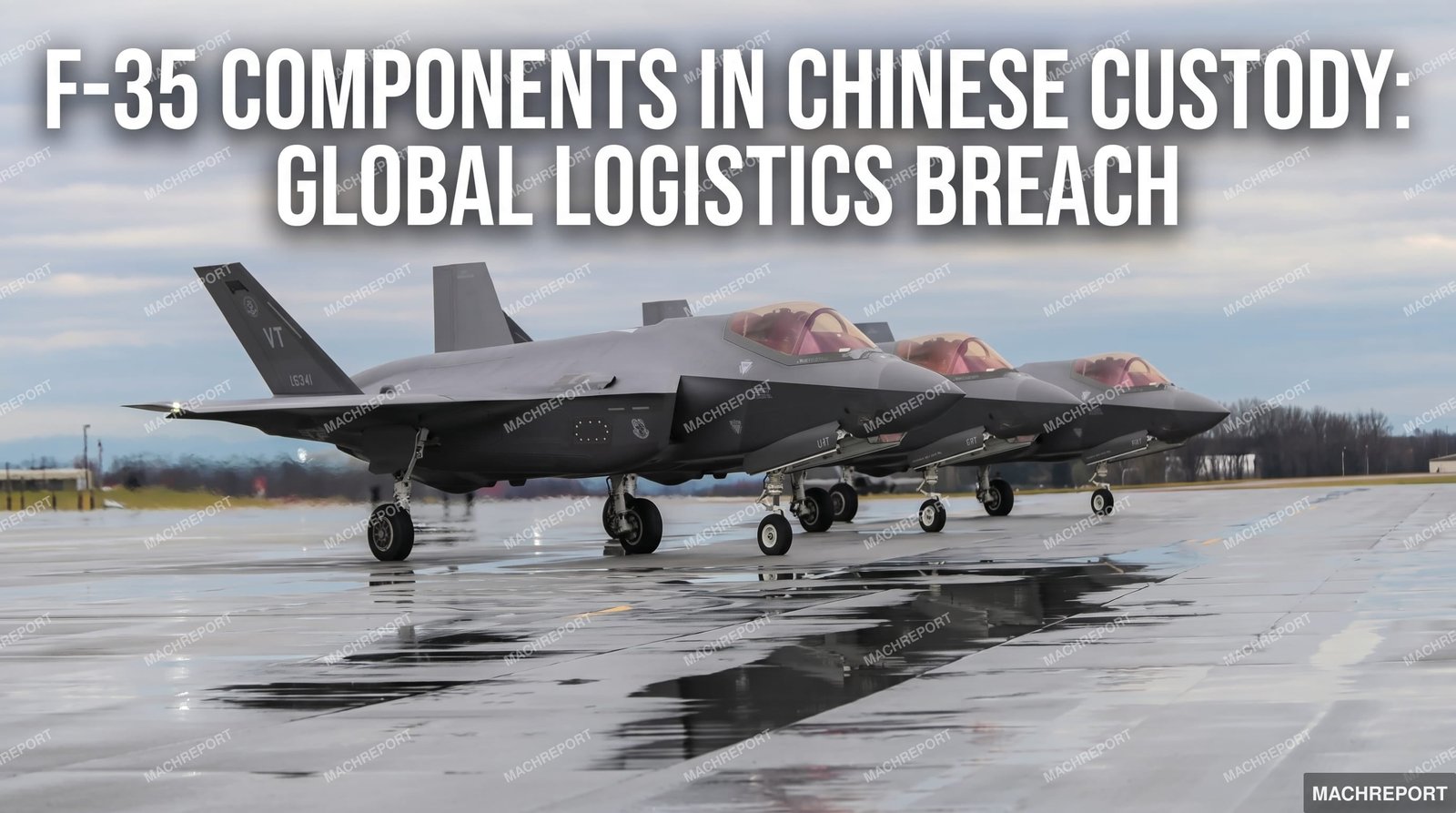
An unexplained diversion of Australian F-35 parts to Hong Kong exposes critical vulnerabilities in military logistics and modern AI air defense networks.
The international defense community was shaken following revelations that critical components from an Australian F-35 Lightning II fighter jet were diverted to Hong Kong and reportedly taken into Chinese custody. According to reporting first detailed by Bloomberg , the shipment included an F-35 cockpit canopy and a weapons-bay door that were removed from an Australian aircraft and scheduled for transport to the United States for maintenance, repair, or disposal. Instead of reaching their American destination, the parts departed Australia in late May, stopped in South Korea, and mysteriously arrived in Hong Kong. The recent controversy surrounding AI Air Defense and F-35 Supply Chain Security illustrates how logistical vulnerabilities can jeopardize strategic deterrence. The development has triggered immediate scrutiny across Western defense circles, particularly regarding the integration of stealth platforms with next-generation AI air defense architectures. A major breach in military supply chains can severely compromise regional counter-air defense strategies by exposing sensitive materials to hostile powers.
The shipment was managed by commercial freight carrier UPS and originated from sustainment operations supporting Australia’s fleet of 72 F-35A aircraft. While Australian Defence Minister Richard Marles emphasized in statements covered by ABC Newsthat Canberra’s initial assessment indicated the cargo did not contain sensitive parts, the inclusion of radar-absorbing materials has provoked intense concern. The incident has also raised sharp questions about whether Pentagon AI supply chain tracking tools failed to flag the unauthorized routing in real time.
AI Air Defense and F-35 Supply Chain Security
The unexplained diversion to a Chinese special administrative region represents an alarming breakdown in international logistics protocols. The F-35 was designed to penetrate sophisticated integrated counter-air defense systems without detection. Its stealth capabilities rely on specialized composite materials, classified geometric shaping and advanced radar-absorbing coatings applied to leading edges, canopies, and internal weapons-bay enclosures. By analyzing the radar-absorbing material directly, foreign researchers could optimize their own AI missile defense algorithms to track stealth fighters at greater distances.
Physical access to stealth hardware allows foreign technical teams to measure electromagnetic wave absorption, giving them an advantage in contested electronic warfare environments. While possession of a canopy and a weapons-bay door does not equate to unlocking the entire design of a fifth-generation jet, physical inspection offers insights that cannot be acquired through distant observation. Defense planners have increasingly relied on Pentagon AI initiatives to monitor component life cycles and contractor logistics. Military analysts emphasize that the real value of stealth signatures lies in how they interact with advanced AI air defense radar algorithms capable of pattern recognition .
Technical Vulnerabilities and Espionage Risks
As reported by, Chinese authorities reportedly assumed custody of the diverted components after they touched down in Hong Kong. Although public reporting has not confirmed whether Chinese engineers have completely disassembled or chemically analyzed the parts, the mere possibility of foreign laboratory examination represents a high-priority counterintelligence concern. Stealth coatings and avionics work in concert with airborne electronic warfare pods to defeat multi-layered tracking systems .
Modern sensor grids rely heavily on AI air defense nodes to identify anomalies in radar cross-sections. In contemporary air combat, raw radar returns are parsed by machine-learning models trained to separate low-observable aircraft from atmospheric clutter and background noise. Threat networks utilizing AI missile defense frameworks depend on physical sensor telemetry to train threat-detection models. If adversaries uncover the chemical composition of the coating, they can adjust their integrated counter-air defense parameters to reduce the aircraft's stealth margin. This risk highlights why physical hardware security is directly tied to digital combat superiority.
Scrutiny Over Commercial Freight and Allied Oversight
The F-35 Joint Program Office and the [U.S. Department of Defense confirmed they are actively investigating the route anomaly alongside Australian authorities and primary contractor Lockheed Martin. The incident has cast an uncomfortable spotlight on the reliance on third-party commercial couriers for sensitive military hardware. Moving components between the United States, Australia, and regional maintenance depots requires hundreds of logistical transfers each month. The breach underscores the need for robust electronic warfare protections to safeguard logistics data links from foreign interception.
Investigators are evaluating new safeguards powered by Pentagon AI to ensure end-to-end automated oversight across international transit hubs. A failure to protect stealth coatings gives adversaries the raw physical data needed to update their AI missile defense batteries. Furthermore, securing the sustainment pipeline is essential for maintaining the operational edge of allied AI air defense operations across the Indo-Pacific.
Several central questions remain unanswered by ongoing inquiries:
- What administrative or routing error led the shipment to transition through South Korea into Hong Kong?
- Were manifest declarations altered intentionally, or was the delivery the result of routine commercial misdirection?
- Did Chinese security personnel conduct non-destructive material evaluations or spectroscopic scans while the items remained in their possession?
- Which specific tracking safeguards failed within the global asset management framework?
Strategic Implications for Modern Warfare
The logistical compromise in Hong Kong demonstrates that supply chain integrity cannot be separated from frontline combat survivability. Deploying advanced Pentagon AI oversight across all maintenance pipelines remains the primary defense against future supply chain compromises. Maintaining an enduring advantage in airborne electronic warfarerequires total security over both digital communications and physical parts.
Protecting the integrity of fifth-generation aircraft remains vital to ensuring allied dominance in integrated counter-air defense operations. Ultimately, preventing logistical leaks is just as crucial to deterrence as deploying cutting-edge AI missile defense systems. As military aviation enters an era defined by automated tracking, the resilience of allied I air defense will depend entirely on airtight logistics.
Comments
Login to comment
No comments yet. Start the conversation.