AI-Enabled Warfare: The Apache Rescue
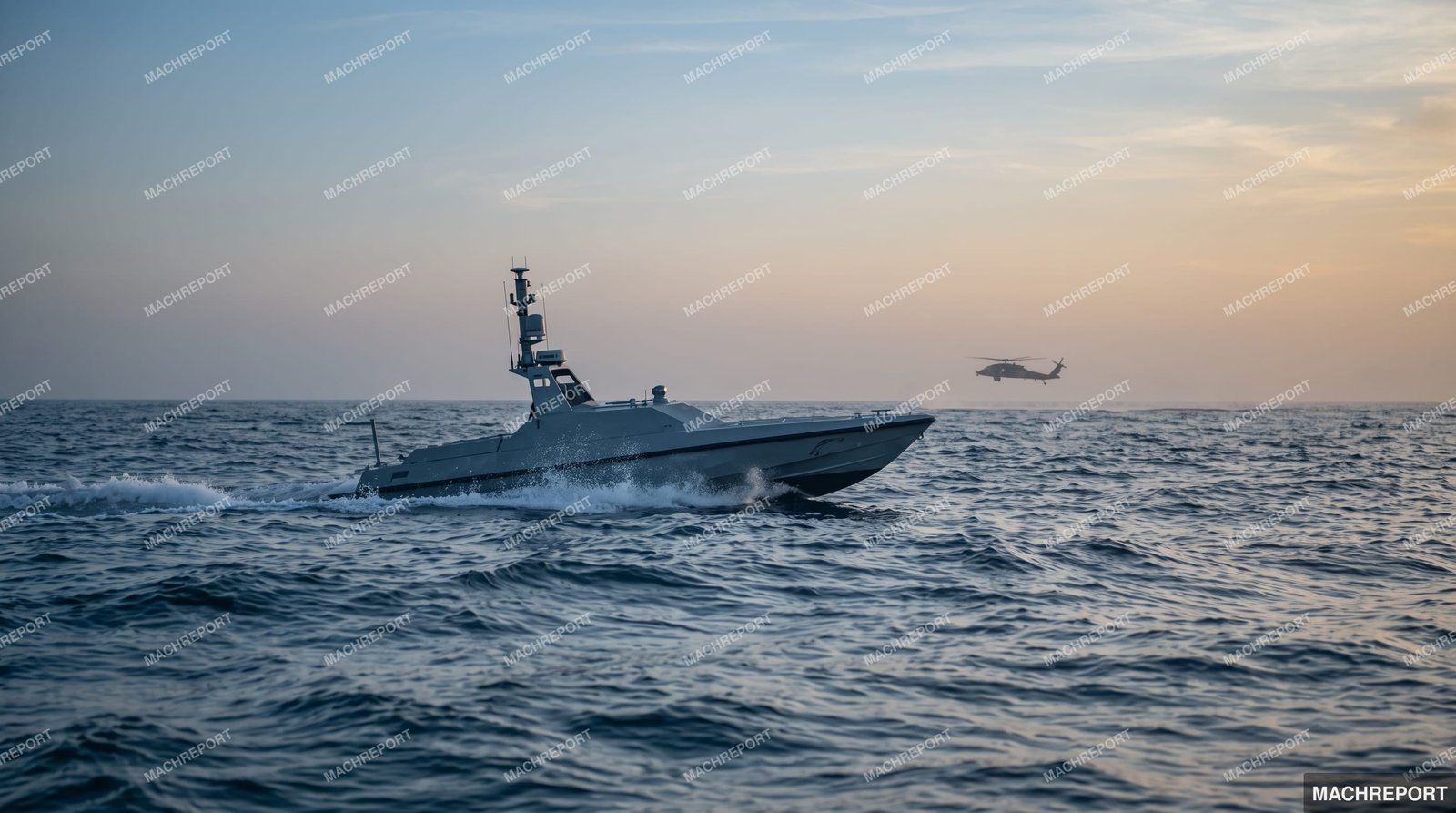
A U.S. Navy drone boat rescued two Apache pilots near Oman, marking a first for **AI-enabled warfare** and autonomous combat search and rescue.
On the night of June 8, 2026, a U.S. Army AH-64 Apache helicopter went down near the Strait of Hormuz off the coast of Oman while patrolling regional waters. What happened next made military history. A U.S. Navy drone boat, operating with no crew onboard, found and rescued the two aviators from the water. Central Command confirmed the incident at 7:33 p.m. ET, and the soldiers were pulled to safety within roughly two hours, both reported in stable condition. Months later, Joint Chiefs of Staff Chairman Gen. Dan Caine cited the rescue in a keynote address as evidence of how artificial intelligence is reshaping modern military operations. The incident offers a real-world glimpse into AI-enabled warfare, where AI helps humans process information and make decisions faster while autonomous systems carry out missions in the field. The headline is accurate, but the details underneath it are more interesting and more useful than most of the coverage has captured.
AI-Enabled Warfare: How Drone Boats Are Changing Military Rescue
The Apache crashed around 7:30 p.m. ET while on patrol in international waters. The cause remains under investigation, with early reports pointing to hostile action during the broader Iran conflict underway at the time. The two crew members ended up in the water and were located by a drone boat operated by Task Force 59, the Navy's Bahrain-based unmanned systems unit under 5th Fleet.
The drone boat picked up the crew members, moved them to another position on the water, and had them hoisted onto a helicopter for transport to medical care. Rescue efforts were led by U.S. Naval Forces Central Command and the 82nd Airborne Division, with support from Air Force and Navy units. CENTCOM called it the first known use of an unmanned surface vessel executing a personnel recovery mission in a real combat search and rescue operation.
The Drone Boat Behind the Rescue
The vessel involved was a Saronic-built Corsair, a 24-foot autonomous surface craft with a range beyond 1,000 nautical miles, a 1,000-pound payload, and a top speed around 35 knots.
Task Force 59 had only started operating Corsairs in the region in late March, about ten weeks before the rescue took place.
Saronic, the Texas-based company that builds the Corsair, confirmed its role publicly after the rescue, stating it was proud to support the service members involved. The company isn't a small startup running a demo. It closed a $1.75 billion funding round in March 2026 at a $9.25 billion valuation, roughly double what it was worth a year earlier, and says it can produce 400 to 500 Corsairs a year at its Austin facility, with plans to scale toward 2,000. None of that growth was a response to the rescue. It was already underway before the Apache went down.
What AI Actually Did in This Rescue
Most coverage frames this as a story about a machine deciding to run a rescue mission on its own. That's not what happened, and it's not what Gen. Caine actually said. His point was that AI helped sailors turn a flood of sensor and tracking data from across a wide stretch of ocean into a picture clear enough to act on within seconds, fast enough to redirect a drone boat that already happened to be nearby.
That distinction matters. The Corsair didn't autonomously choose to conduct search and rescue. It was a cheap, persistent, forward-positioned asset that human operators could task quickly because AI had already made sense of the surrounding picture. Joint doctrine for personnel recovery, JP 3-50, still assumes every asset in a rescue chain has a human crew, because until June 8, that had always been true. Defense analysts have described the rescue use of the Corsair as improvised, not something the platform was originally built or planned for.
The Corsair's role didn't stay limited to search and rescue. By July, the same class of drone boat had moved into direct combat, striking an Iranian submarine and ship-maintenance facility in what CENTCOM called the first combat use of unmanned surface vessels by U.S. forces. In under two months, a platform that pulled two soldiers out of the water was carrying out strike missions. That's a fast jump from rescue tool to combat asset, and it says a lot about how quickly the Navy is willing to expand what these boats are used for.
Why Ukraine's Drones Matter More Long-Term
Gen. Caine's speech didn't stop at the Apache rescue. He also pointed to Ukraine, where firstperson-view drones now use onboard computer vision to keep tracking a target even after GPS is jammed and communication links are cut. Unlike the Corsair, which depends on a wellfunded U.S. contractor and a dedicated Navy task force, this kind of drone technology is cheap and can be copied by almost any state or armed group with a small budget.
Caine's warning that future forces should expect to be hunted by autonomous systems, jammed across the spectrum, and tracked in real time isn't really about one war. It's about how much harder it's getting for anyone to stay hidden on a modern battlefield, and that problem is going to reach far more militaries than the Apache-style rescue ever will.
The Apache rescue off Oman is a genuine first, and it will keep getting cited as a landmark moment in AI-enabled warfare. But the accurate version of that story is about AI helping humans see and decide faster, not machines making combat decisions on their own, and about military doctrine racing to catch up with hardware that's already in the field. The bigger and more urgent shift, especially for militaries without billion-dollar budgets, is happening in Ukraine, where cheap, jam-resistant drones are changing what it means to hide on a battlefield at all.
Comments
Login to comment
No comments yet. Start the conversation.