Delhi Voter Roll Protests: Youth Challenge Modi Government
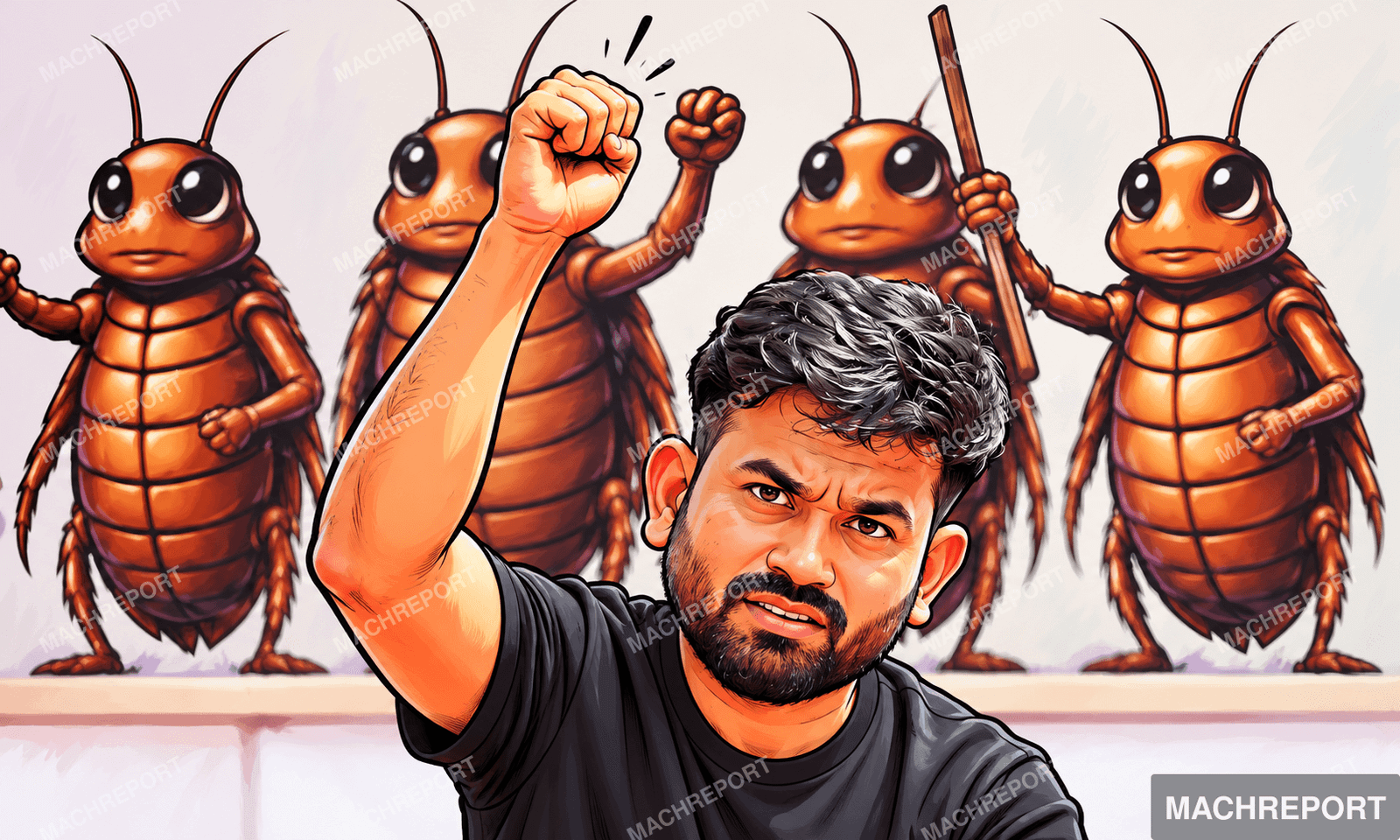
Delhi Voter Roll Protests intensify as Cockroach Janta Party plans a fresh march against India's controversial electoral roll revision amid tight security.
New Delhi, October 16, 2026, Delhi Voter Roll Protests have intensified political tensions in India as the youth-led Cockroach Janta Party (CJP) prepares for fresh demonstrations against the Election Commission's controversial electoral roll revision. Authorities have tightened security across the capital and restricted public gatherings amid growing concerns over alleged voter exclusions, electoral transparency, and democratic accountability.
The demonstration, scheduled at Central Park in Connaught Place on Friday, follows a series of protests against the Election Commission of India over allegations that millions of eligible citizens have been excluded from voter lists. Authorities have imposed restrictions on public gatherings, raising the prospect of another confrontation between protesters and security personnel.
According to The Indian Express, more than 25,000 police and paramilitary personnel have been deployed, with additional surveillance and crowd-control measures introduced around sensitive areas of the capital.
Delhi Voter Roll Protests Spark Fresh Political Confrontation
The latest demonstrations are rooted in the Election Commission of India's Special Intensive Revision (SIR), an extensive exercise designed to update electoral registers by removing duplicate, deceased, relocated, and otherwise ineligible voters.
However, the revision has become increasingly contentious as opposition parties and civil society organizations question the accuracy and transparency of the process. Reports indicate that approximately 130 million names have been removed from electoral rolls during the broader revision exercise, prompting concerns that some legitimate voters may have lost their electoral registration.
Opposition groups argue that the exercise could disproportionately affect marginalized communities, including religious minorities, migrant workers, and economically disadvantaged citizens. The Election Commission, meanwhile, maintains that electoral roll verification is necessary to ensure accurate voter records and prevent irregularities.
The controversy has consequently moved beyond an administrative dispute, developing into a broader debate over electoral rights, institutional accountability, and public confidence in India's democratic system.
Cockroach Janta Party Emerges as a Youth Protest Movement
The Cockroach Janta Party has become a prominent participant in the latest demonstrations, attracting attention through its unconventional political messaging and extensive social media presence.
Founded by youth activist Abhijeet Dipke, the movement initially gained recognition by highlighting unemployment, educational challenges, and dissatisfaction with political representation. Its emergence reflects frustration among sections of India's younger population over economic opportunities and government accountability.
The movement has since expanded its focus to electoral transparency, with supporters accusing the Election Commission of failing to adequately address concerns surrounding voter-list deletions.
As reported by Reuters, Dipke's rise from social media activism to organizing street demonstrations illustrates the growing role of digitally connected young Indians in political mobilization. The CJP and its supporters are demanding the resignation of Chief Election Commissioner Gyanesh Kumar, whom they hold responsible for alleged irregularities in the electoral revision process.
Security Tightened Ahead of Fresh Demonstrations
Security preparations have intensified across central New Delhi ahead of the CJP's planned "Lehra Do Tiranga" march. Police have imposed restrictions under Section 163 of the Bharatiya Nagarik Suraksha Sanhita in Connaught Place and surrounding areas. Authorities have also announced the closure of Central Park on October 16 and 17, while increased surveillance and barricading are expected to affect movement around key locations.
The measures follow earlier demonstrations during which police detained activists, students, and political figures attempting to gather against the electoral revision. According to The Financial Express, authorities have issued traffic advisories amid concerns over possible disruptions in central Delhi.
While officials describe the restrictions as necessary to maintain public order, protest organizers contend that repeated security interventions are limiting their ability to demonstrate peacefully.
India Electoral Roll Revision Raises Questions Over Democratic Accountability
The electoral controversy has intensified scrutiny of India's democratic institutions at a time when public trust in electoral administration remains central to political stability.
Although voter-list verification is a routine administrative responsibility, the scale of the current exercise has generated concern regarding procedural safeguards and access to correction mechanisms.
Critics argue that removing eligible voters from electoral registers could undermine participation in future elections, particularly among communities that may encounter difficulties completing documentation requirements.
However, allegations of politically motivated voter exclusions remain contested, and the scale of deletions alone does not establish that every removed entry belonged to an eligible voter. The debate therefore extends beyond individual voter registrations to questions about how electoral institutions should balance fraud prevention, administrative efficiency, and protection of voting rights.
Growing Gen Z Protests in India Present Political Challenges
The expansion of youth-led demonstrations represents an important development in India's political environment.
Unlike traditional political mobilization organized primarily through established parties, movements such as the CJP have relied heavily on digital platforms to coordinate activities, circulate political messages, and attract supporters. Issues including unemployment, examination irregularities, economic pressures, and electoral governance have increasingly become rallying points for younger activists.
The convergence of these grievances has broadened the scope of protests, creating new challenges for the government as it seeks to balance public order with constitutional rights.
At the same time, support from opposition parties and student organizations has given the demonstrations a wider political dimension.
Political Implications and Future Outlook
The latest protests underscore growing divisions over electoral governance and the relationship between state institutions and politically active citizens.
For Prime Minister Narendra Modi's administration, continued demonstrations could sustain public scrutiny of electoral procedures and the government's response to dissent. For opposition parties, the controversy provides an opportunity to raise questions about electoral transparency and institutional independence.
The immediate challenge for authorities is to prevent violence and disruption while allowing lawful political expression. More broadly, the dispute highlights the importance of transparent electoral administration, effective grievance-resolution mechanisms, and public confidence in democratic procedures.
As protesters prepare for another demonstration in New Delhi, the controversy surrounding India's voter-roll revision remains unresolved, with its longer-term political consequences dependent on legal developments, institutional responses, and the ability of competing groups to address public concerns.
The unfolding confrontation illustrates how a dispute over electoral administration has developed into a wider national debate about political participation, democratic accountability, and the influence of India's younger generation.
Comments
Login to comment
No comments yet. Start the conversation.