From Bharat Innovates to Pakistan’s Innovation Imperative: Lessons for Building A Globally Connected Defence-Technology Ecosystem
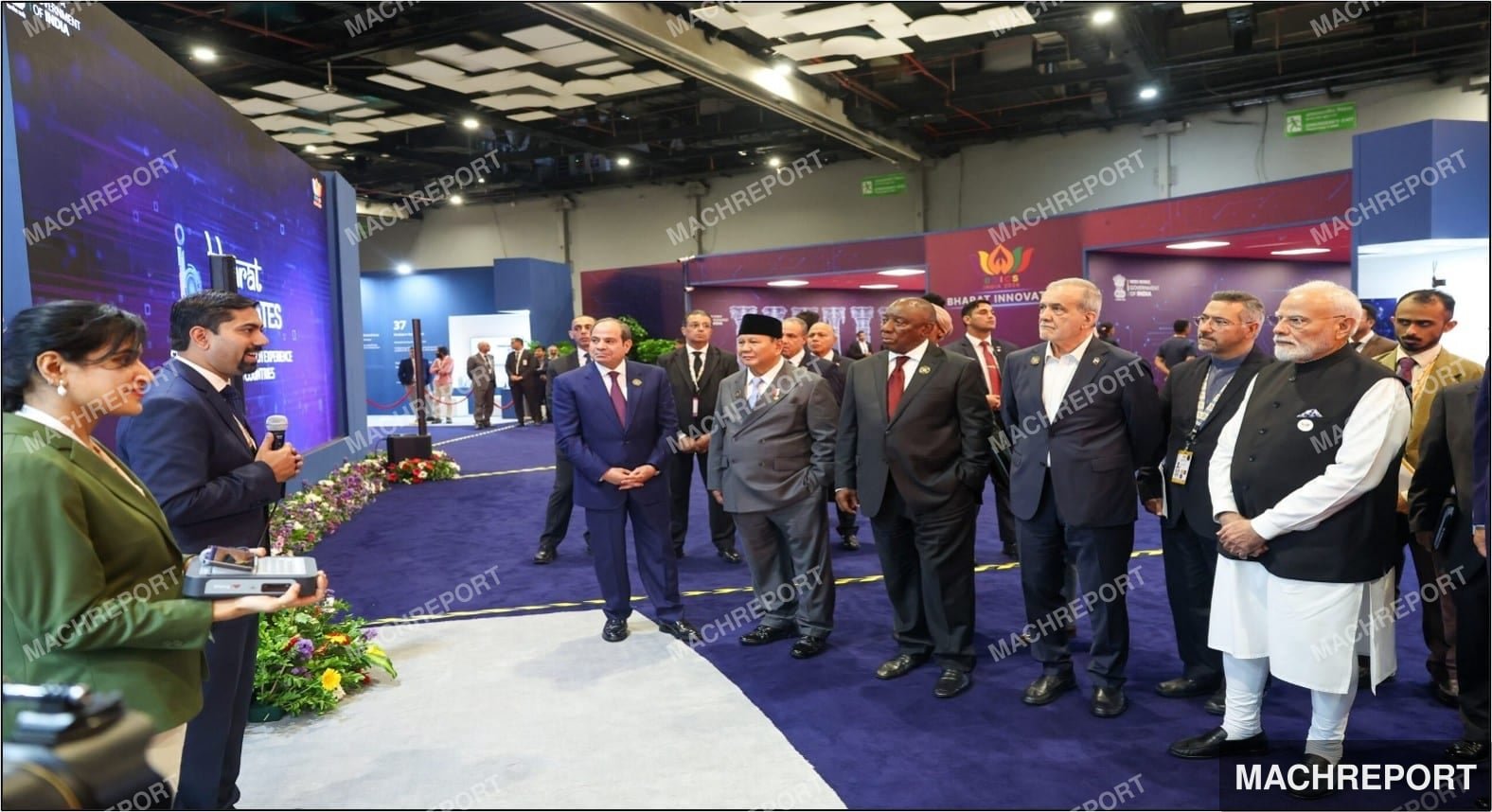
India’s BRICS Bharat Innovates (BBI) Exposition 2026, held in New Delhi alongside the BRICS Summit, showcased 37 Indian deep-tech startups and highlighted how innovation can support national security, economic development and diplomacy. More than a technology exhibition, BBI connected startups and research institutions with international governments, investors and industry. For Pakistan, its key lesson is the need to build a stronger innovation ecosystem linking universities, startups, defence institutions, private industry, investors and global partners to develop dual-use technologies and create a continuous pathway from innovation to operational capability.
BBI 2026 AS A MODEL OF INNOVATION DIPLOMACY
The key feature of BBI was its integration of innovation with international engagement, using the BRICS platform to connect Indian startups with foreign governments, investors, businesses and technology stakeholders. Through B2B meetings, investment opportunities, technology partnerships and international outreach, India used the exposition not merely to showcase startups but to promote its technological capabilities as part of economic and strategic diplomacy. The initiative, supported by international roadshows and investor engagements, demonstrates how technology exhibitions can strengthen global partnerships, attract investment and enhance a country’s technological and diplomatic profile.
DEFENCE TECHNOLOGY AS PART OF THE WIDER INNOVATION ECOSYSTEM
The defence component of BBI is particularly relevant for Pakistan, as India showcased indigenous capabilities in UAVs, counter-drone systems, electronic warfare, surveillance, AI, space, cybersecurity, semiconductors, quantum technologies and secure communications. Startups demonstrated solutions ranging from drone swarms and UAV propulsion to satellite intelligence and advanced sensing, highlighting the growing role of the private sector in defence innovation. The key lesson is that modern defence strength depends not only on manufacturing weapons but also on developing a domestic ecosystem of critical technologies that supports innovation, self-reliance and export potential.
WHAT PAKISTAN CAN LEARN
Pakistan already possesses several important foundations upon which such an ecosystem can be built. Institutions such as the National Aerospace Science and Technology Park (NASTP), universities, research organizations, defence production entities and the country’s growing technology sector provide an institutional base. Pakistan also has experience in aerospace, UAVs, electronic systems, cyber technologies, missile systems and defence manufacturing.
However, the principal challenge is fragmentation. Pakistan needs a stronger mechanism connecting universities and startups with the operational requirements of the armed forces and the commercial requirements of industry. Defence innovation should not remain concentrated within traditional state-owned organizations. At the same time, startups should not be expected to survive solely through commercial markets when their technologies have long development cycles and uncertain initial demand.
A Pakistani equivalent of the BBI philosophy should therefore establish a national defence and dual-use innovation platform bringing together the Ministry of Defence, armed forces, NASTP, universities, engineering institutions, private-sector companies, venture capital, banks and technology investors. The objective should be to identify operational problems and invite startups to develop solutions rather than simply asking startups what products they already possess.
The first priority should be problem-driven innovation. The armed forces could publish carefully structured technology challenges involving counter-UAS, electronic warfare, secure communications, battlefield networking, autonomous systems, AI-assisted intelligence analysis, satellite imagery, cyber defence, navigation resilience, logistics and low-cost sensors. Startups and universities could then compete to develop prototypes. Successful technologies should receive access to military testing ranges, technical mentorship and pathways toward procurement.
The second priority should be rapid experimentation and procurement. One of the greatest obstacles for defence startups is the gap between developing a prototype and obtaining a meaningful contract. International experience demonstrates that defence innovation requires mechanisms through which promising technologies can be rapidly tested, evaluated and introduced into service. Current developments in other countries show increasing efforts to connect startups directly with military users and to shorten the transition from innovation to deployment.
Pakistan should consequently establish dedicated pathways for small-scale procurement of successful prototypes, followed by larger contracts when operational performance is demonstrated. This would create predictable demand and encourage private investors to finance defence technology companies.
FROM TECHNOLOGY ACQUISITION TO TECHNOLOGY CO-DEVELOPMENT
Another major lesson concerns international partnerships. Pakistan has traditionally relied heavily on defence cooperation and technology acquisition from established partners. Such partnerships remain important, but the next stage should increasingly involve co-development and co-production.
Pakistan could use its diplomatic relationships with China, Türkiye, Saudi Arabia, Gulf states, Central Asian countries and selected European and Asian partners to establish joint innovation programmes. Rather than limiting cooperation to procurement of completed platforms, Pakistan should seek partnerships involving joint laboratories, technology accelerators, university exchanges, shared testing facilities, venture investment and collaborative development.
For example, a Pakistan–Türkiye innovation programme could focus on autonomous systems, aerospace technologies and robotics; a Pakistan–China programme could concentrate on electronics, AI, semiconductors, space and communications; while partnerships with Gulf investors could provide capital for scaling Pakistani defence and dual-use startups. Such arrangements would transform defence diplomacy from a primarily procurement-oriented relationship into a technology-development relationship.
Pakistan should also recognize the importance of export orientation from the beginning. India’s BBI model explicitly connects indigenous technology development with international market access and export potential. Pakistan similarly needs to develop products that are affordable, modular and adaptable to the requirements of international customers. UAVs, counter-UAS systems, secure communications, electronic warfare support systems, cyber solutions, simulation technologies, surveillance systems and selected aerospace components could provide potential entry points.
BUILDING PAKISTAN’S OWN “INNOVATION DIPLOMACY”
The key lesson from BBI is that technology and foreign policy are increasingly interconnected. Pakistan should adopt an “innovation diplomacy” approach by linking its embassies, defence attachés, universities, startups and technology organizations with global investors, defence firms and research institutions. A regular Pakistan Defence and Dual-Use Technology Exposition, supported by international roadshows and joint research initiatives, could promote Pakistani technologies, attract investment and build global partnerships while creating a stronger and more coordinated national innovation ecosystem.
The BBI Exposition 2026 demonstrates that innovation ecosystems can serve as instruments of national power when effectively integrated with government, industry, defence institutions, investors, academia and international partners. India’s showcase of 37 deep-tech startups during the BRICS Summit highlights how technology exhibitions can simultaneously promote indigenous innovation, attract global investment, strengthen defence capabilities and advance technology diplomacy. For Pakistan, the key lesson is not to replicate India’s model mechanically, but to develop a nationally coordinated ecosystem linking universities, startups, defence users, industry, investors, international partners and export markets. Pakistan possesses considerable scientific, engineering and defence expertise, but stronger institutional coordination and a more efficient mechanism for transforming research into scalable, marketable and operational technologies are required. As emerging technologies such as artificial intelligence, autonomous systems, cybersecurity, space technologies, quantum computing and semiconductors increasingly shape national security, Pakistan must move beyond a procurement-oriented approach toward sustained innovation, co-development and global technological partnerships. Ultimately, the strategic lesson of BBI 2026 is that Pakistan’s future defence strength will depend not only on acquiring advanced platforms, but on its ability to build an ecosystem capable of continuously developing, testing, financing, manufacturing and exporting the technologies that will define future security.
Comments
Login to comment
No comments yet. Start the conversation.