India F-35 Deal: No Formal US Offer, Says Air Force Chief
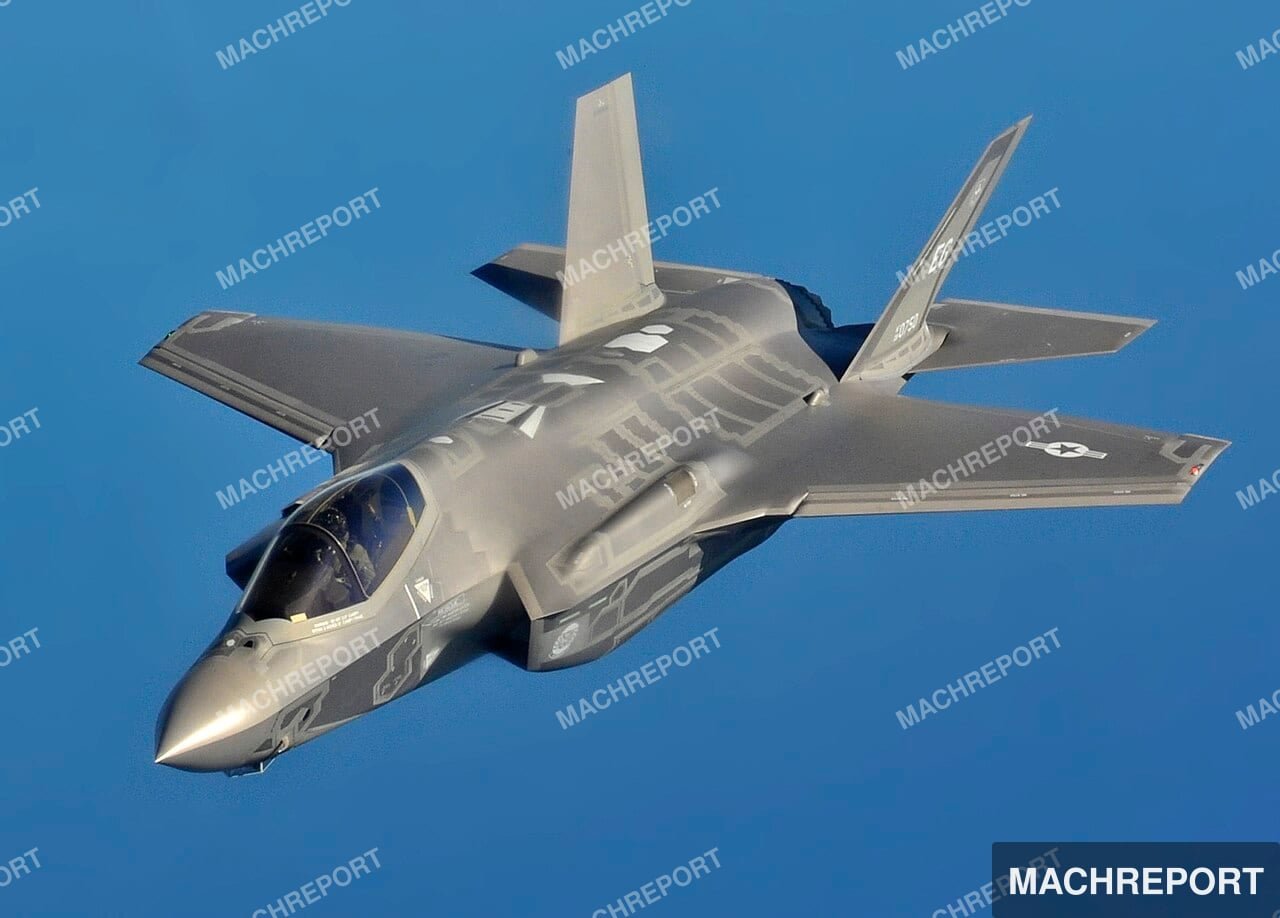
India F-35 deal remains uncertain as Air Chief Marshal Amar Preet Singh confirms no formal US offer, raising questions about India's stealth fighter plans.
India F-35 deal remains uncertain after Indian Air Force Chief Air Chief Marshal Amar Preet Singh revealed that the United States has not made a formal offer to supply its fifth-generation stealth fighter. His remarks highlight the difference between Washington's stated interest in expanding defence cooperation and the concrete steps required to turn a potential aircraft sale into an acquisition programme.
The issue gained renewed attention during Exercise Tarang Shakti, where American F-35A fighters participated alongside Indian aircraft at Jodhpur. Although the deployment provided Indian personnel with an opportunity to observe the advanced aircraft in an operational training environment, it did not establish that a purchase agreement was under consideration at a formal negotiating stage.
Singh's comments have consequently raised questions about the status of the proposed American fighter sale, the level of technical access available to India and the future direction of the Indian Air Force's modernisation strategy.
India F-35 Deal Faces Questions Over Technical Access
Speaking alongside General Kevin Schneider, commander of United States Pacific Air Forces, Singh questioned the apparent contradiction between discussions about selling the aircraft and the restrictions placed on Indian personnel during the exercise.
He pointed out that Indian personnel had not been permitted to inspect the F-35's cockpit, despite Indian and American aircraft operating in close formation during the training activities.
The distinction is important because participation in a joint exercise does not automatically provide a prospective buyer with the technical information needed to evaluate an advanced combat aircraft. Access to aircraft systems, operational limitations, maintenance arrangements and other sensitive information would be relevant to a comprehensive procurement assessment.
Six US Air Force F-35As and more than 200 American personnel reportedly participated in the deployment. The aircraft's appearance at an exercise on Indian soil expanded direct military interaction between the two countries, but no publicly established purchase terms emerged from the event.
For India, the experience offered exposure to American fifth-generation aviation without resolving the questions surrounding a potential acquisition.
Trump's Earlier Announcement Has Yet to Produce a Formal Offer
The current uncertainty follows US President Donald Trump's February 2025 announcement that Washington intended to pave the way for the eventual supply of F-35 fighters to India. That announcement signalled a possible expansion of bilateral defence cooperation and placed the aircraft among the capabilities that could feature in future discussions between the two governments.
However, political statements about facilitating a future sale are different from a formal procurement proposal. An actual offer would need to establish the scope of the proposed acquisition and provide a basis for assessing aircraft configuration, delivery schedules, training, weapons integration and long-term support.
A bilateral statement also referred to a US policy review concerning the potential release of fifth-generation fighters and undersea systems to India. Such a review could create opportunities for further defence cooperation, but it does not, by itself, confirm that an aircraft sale has been authorised or agreed upon. Singh's clarification therefore provides an important indication of the publicly acknowledged status of the proposal: despite earlier political messaging, a formal American offer had not been presented to the Indian Air Force, according to his remarks.
Indian Air Force Stealth Fighter Plans Remain Open
The absence of a formal F-35 offer leaves India with important decisions about how to meet its future combat aviation requirements. These decisions involve not only aircraft performance but also operational independence, technology access, industrial participation and the cost of maintaining a fleet over several decades.
A potential F-35 acquisition would require India to assess whether the aircraft's capabilities and associated support arrangements fit its strategic requirements. The evaluation would also need to consider how a new fleet could be integrated into the existing force structure, which operates aircraft acquired from several international suppliers alongside domestically developed platforms.
Questions about the availability of technical information and the conditions attached to sensitive technology would be particularly relevant. India would need sufficient clarity about operational employment, maintenance responsibilities and long-term access to essential support before determining whether an imported stealth fighter meets its requirements.
Until a formal proposal and an authorised evaluation process are established, the F-35 should be treated as a potential option rather than a confirmed component of India's future air force inventory.
Russia's Su-57 Proposal Adds Another Dimension
Russia's Su-57 has also featured in discussions about India's future fifth-generation fighter options. However, the American and Russian propositions should not be treated as equivalent procurement offers without comparable information about their scope, commercial terms and technical arrangements.
Singh indicated that the Indian government had not decided whether the Indian Air Force should evaluate the Russian aircraft. This leaves the status of that option unresolved as well.
Any comparison would require a detailed examination of operational performance, acquisition costs, weapons compatibility, maintenance requirements, industrial cooperation and the availability of technology. Political relationships and the ability to sustain an aircraft independently would also influence the decision.
India's choice would ultimately depend on how the available platforms align with its military requirements and longer-term defence planning, rather than on the presence of either aircraft at an exercise or in diplomatic discussions.
India's AMCA Programme Remains a Key Domestic Priority
India's indigenous Advanced Medium Combat Aircraft (AMCA) programme provides a separate pathway for developing a domestically produced fifth-generation fighter.
The programme reflects India's broader ambition to strengthen domestic aerospace capabilities and reduce reliance on foreign suppliers for advanced combat aircraft. Its progress will depend on development milestones, funding, technological maturity and the industrial capacity required to move from design to production.
The relationship between AMCA and any potential foreign stealth fighter acquisition would require careful planning. An imported platform could offer one route to acquiring advanced capabilities, while the domestic programme could support India's longer-term aerospace ambitions. However, pursuing both approaches would raise questions about resource allocation, engineering capacity, infrastructure and future fleet requirements.
No definitive conclusion about the future balance between imported and indigenous fighters can be drawn from the current status of the F-35 proposal.
What the India F-35 Deal Means for US-India Defence Relations
The episode highlights a distinction between growing military engagement and the more demanding process of agreeing on advanced defence equipment.
Joint exercises can improve coordination, familiarise personnel with foreign operating procedures and strengthen professional relationships. They do not necessarily indicate that either side has resolved the political, technical and commercial issues involved in transferring highly sensitive military technology.
For Washington, deploying F-35As to India demonstrates an opportunity to expand operational engagement with a major Indo-Pacific partner. A potential sale, however, would involve additional decisions about technology protection, export authorisation, support arrangements and the conditions governing the aircraft's use.
For New Delhi, the issue extends beyond acquiring a particular fighter. India's defence planners must determine which capabilities best serve national security requirements while preserving an appropriate balance between international partnerships and domestic industrial development.
The absence of a formal offer also limits reliable conclusions about potential acquisition numbers, costs or delivery timelines. Without publicly confirmed terms, projections about when an Indian F-35 fleet might enter service would remain speculative.
Political Interest Has Not Yet Become a Procurement Commitment
The latest remarks from India's air chief underline the gap between the possibility of an American stealth fighter sale and the evidence needed to establish that a procurement process is advancing.
Trump's earlier announcement created expectations about a potential expansion of defence ties, while the participation of US F-35As in Exercise Tarang Shakti provided a visible example of military cooperation. Neither development, however, establishes an agreed purchase or a confirmed delivery pathway.
The next significant indicator would be a formal proposal, an announced evaluation decision or an official acquisition framework clarifying the aircraft's potential role and the conditions attached to its transfer.
Until such a development occurs, the India F-35 deal remains a prospective possibility rather than a confirmed procurement programme. India's future stealth fighter strategy will depend on the decisions it makes about foreign aircraft, domestic development and the operational requirements of its air force.
Comments
Login to comment
No comments yet. Start the conversation.