India Summons Pakistani Envoy After Naval Collision in Arabian Sea
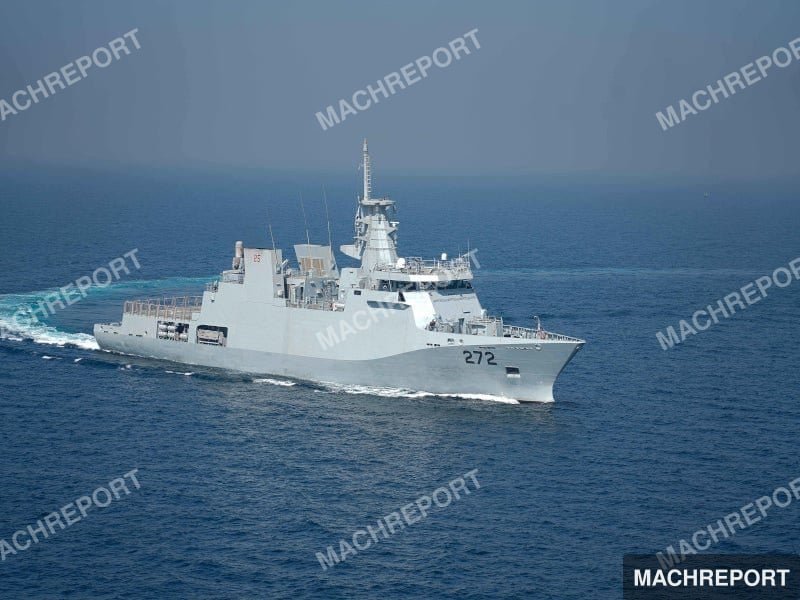
India has summoned Pakistan’s senior diplomatic representative in New Delhi and lodged a “strong protest” following a collision between Pakistani and Indian naval units in the North Arabian Sea.
According to India’s Ministry of External Affairs (MEA), the incident took place on September 15 in international waters. New Delhi described the conduct of the Pakistani naval vessel as “unacceptable and unprofessional” and said the encounter resulted in a collision, although no major damage was reported.
India has also alleged that the Pakistani vessel’s conduct was in direct contravention of Article 10 of the 1991 Agreement between India and Pakistan on Advance Notice on Military Exercises, Manoeuvres and Troop Movements.
However, the 1991 agreement itself provides an important detail that is central to the dispute. Article 10 states that naval ships and submarines belonging to the two countries “are not to close less than three Nautical Miles (NMs) from each other” while operating in international waters, specifically to avoid accidents.
Dispute Over the Three-Nautical-Mile Separation
The circumstances surrounding the collision remain contested.
While India has accused the Pakistani naval unit of unsafe manoeuvring, Pakistani accounts have focused on the conduct and positioning of the Indian naval vessel during Pakistan Navy's ongoing maritime activities.
According to the Pakistani version of events, the Indian naval unit was operating close to the area of Pakistan Navy's SEASPARK-2026 exercise. Pakistani accounts maintain that the Indian vessel failed to observe the three-nautical-mile separation requirement contained in Article 10 of the bilateral agreement.
This distinction is important because the three-nautical-mile provision is not simply a general maritime convention or a country's territorial-water limit. It is a specific confidence-building measure agreed between India and Pakistan for their naval vessels and submarines operating in international waters. The agreement explicitly links the separation requirement to avoiding accidents.
Independent analysis of India-Pakistan maritime confidence-building measures has also identified Article 10 as requiring the two countries' naval platforms to maintain this minimum separation. The Stimson Center has noted that the provision remains part of the bilateral framework, while also describing the three-nautical-mile rule as an older confidence-building measure in the context of increasingly sophisticated naval operations.
SEASPARK-2026 Provides the Operational Context
The collision comes while Pakistan Navy is conducting SEASPARK-2026, a major maritime exercise involving naval forces and other elements of Pakistan's armed forces.
Large-scale exercises create an environment in which warships may conduct surveillance, tracking, communications, electronic activity and tactical manoeuvres. When forces belonging to two rival states operate in proximity, maintaining agreed separation distances and clear communications becomes particularly important.
Pakistani accounts have said that its naval vessel was deployed after the Indian unit was detected near the exercise area. The Pakistani ship reportedly monitored and shadowed the Indian vessel before the encounter escalated into close manoeuvring.
India, meanwhile, has maintained that its naval unit was conducting routine surveillance in international waters and has placed responsibility for the incident on the Pakistani vessel. Indian reporting has described the Pakistani manoeuvres as unsafe and said the Indian ship suffered no major damage.
At present, the publicly available accounts do not independently establish every detail of the manoeuvres immediately before impact. In particular, the precise distances between the two vessels at different stages of the encounter and the sequence of navigational decisions remain disputed.
Diplomatic Fallout
Following the incident, India's MEA summoned Pakistan's Charge d’Affaires and formally conveyed its protest. India also instructed its diplomatic representative in Islamabad to raise the issue with Pakistan's Foreign Ministry.
New Delhi said the incident occurred in international waters and stressed the importance of military units exercising due care and respecting bilateral agreements to prevent similar incidents.
The diplomatic dispute therefore goes beyond the physical collision itself. At its centre is the interpretation and application of a bilateral maritime confidence-building measure that specifically requires Indian and Pakistani naval platforms to maintain a minimum distance of three nautical miles from one another in international waters.
A similar maritime dispute occurred in 2011, when Indian and Pakistani naval vessels came into close contact during an incident involving INS Godavari and PNS Babur. Contemporary documentation of that episode also referenced the 1991 agreement and its maritime safety provisions.
What Remains Unclear
The latest incident highlights the risks associated with close naval encounters between India and Pakistan, particularly during active military exercises.
India has publicly attributed responsibility to the Pakistani vessel, while Pakistani accounts have raised questions over the Indian vessel's proximity to the exercise area and compliance with the three-nautical-mile separation provision.
Until both sides release fuller operational accounts including the vessels' positions, navigational tracks, communications and the sequence of manoeuvres, it remains difficult to independently establish precisely how the collision occurred.
What is clear from the bilateral agreement is that three nautical miles is the specified minimum separation between Indian and Pakistani naval ships and submarines operating in international waters.
The incident therefore places renewed attention on a 35-year-old maritime confidence-building mechanism designed specifically to prevent the type of accident that has now occurred.
Comments
Login to comment
No comments yet. Start the conversation.