RCEP Opportunities for Pakistan
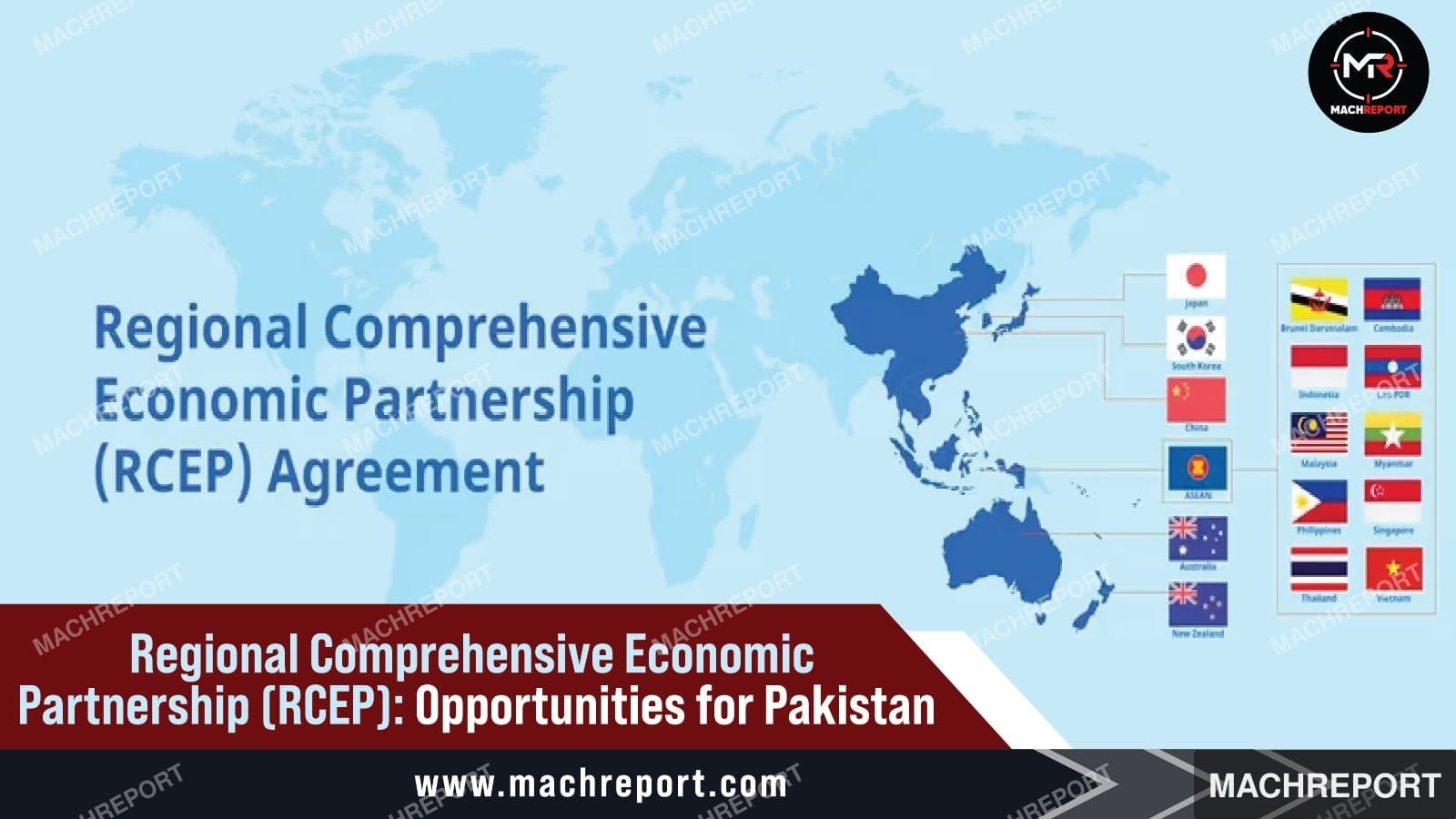
Explore RCEP opportunities for Pakistan to expand exports, attract foreign investment, strengthen regional trade, and improve economic growth.
Regional economic integration has become an important instrument for promoting trade, attracting foreign investment and strengthening economic cooperation among states. Established in 2020, RCEP brings together 15 Asia-Pacific economies, including China, Japan, South Korea, Australia, New Zealand, and the ten members of the Association of Southeast Asian Nations (ASEAN). As global supply chains evolve, countries increasingly rely on regional trade agreements to improve market access, reduce trade barriers, and enhance industrial competitiveness. The Regional Comprehensive Economic Partnership represents one of the most significant developments in this regard.
Although Pakistan is not a member of RCEP, the agreement presents important economic opportunities for the country. Its geographical position, established manufacturing base, agricultural resources, and existing commercial relations with several member states provide a foundation for deeper economic engagement. Exploring such opportunities for Pakistan could help Islamabad diversify its export markets, attract investment, and strengthen its position within Asian production networks.
Understanding RCEP and Its Economic Significance
It is a free trade agreement designed to facilitate commerce among its participating economies by reducing tariffs, harmonising rules of origin, improving customs procedures, and establishing common frameworks for trade in goods and services. Its members collectively represent a substantial share of global economic output, population, and international trade.
A key feature of is its emphasis on regional supply-chain integration. Common rules of origin allow qualifying products manufactured using inputs from multiple member countries to benefit from preferential tariff treatment. This arrangement encourages businesses to distribute production activities across regional markets while improving cost efficiency.
For Pakistan, Regional trade opportunities for Pakistan is particularly relevant because Asian economies are increasingly interconnected through manufacturing, logistics, digital services, and investment. However, the agreement does not automatically provide preferential market access to non-members. Pakistan must therefore pursue alternative channels of economic cooperation to benefit from the commercial opportunities emerging within this regional framework.
Expanding Export Markets
One of the most significant opportunities for Pakistan lies in expanding exports to major Asian economies. Pakistan's textile and apparel industry, rice production, leather goods, surgical instruments, sports equipment, and selected agricultural products offer potential avenues for greater commercial engagement.
China, Japan, South Korea, Australia, and ASEAN economies represent diverse consumer and industrial markets. Pakistani exporters could explore demand for value-added textiles, processed food, pharmaceuticals, and light manufactured goods. Greater attention to product standards, certification, branding, and reliable delivery would improve the competitiveness of Pakistani products.
Rather than relying primarily on traditional export destinations, Pakistan could pursue targeted market-development strategies based on the specific import requirements of individual economies. This approach would help diversify export earnings and reduce excessive dependence on a limited number of markets.
Attracting Foreign Direct Investment
Regional economic integration's integrated production networks may encourage businesses to reconsider where they manufacture, assemble, and distribute products. Pakistan could use its labour force, industrial infrastructure, and access to regional markets to attract investment in export-oriented industries.
Potential areas include textiles, food processing, automotive components, information technology, pharmaceuticals, and selected engineering sectors. Chinese, South Korean, Japanese, and ASEAN investors could contribute capital, technological expertise, and access to international distribution networks.
However, attracting investment would require improvements in regulatory consistency, taxation, energy availability, contract enforcement, and infrastructure. Pakistan must also demonstrate that locally produced goods can meet international quality standards and reach overseas markets competitively.
Strengthening Industrial Competitiveness
This provides an important lesson in the relationship between regional integration and industrial development. Participating economies benefit from interconnected production systems in which components, raw materials, and finished products move across borders according to comparative advantages.
Pakistan could adopt a similar approach by strengthening industrial clusters and encouraging collaboration between domestic manufacturers and foreign firms. The development of specialised industrial zones, improved logistics, and technology-oriented partnerships could increase productivity and promote the production of higher-value goods.
In the textile sector, for example, greater investment in technical fabrics, sustainable manufacturing, and finished apparel could help Pakistan move beyond its traditional dependence on lower-value exports. Similar strategies could support engineering, agricultural processing, and information technology services.
4. Improving Regional Connectivity
Pakistan's location between South Asia, Central Asia, China, and the Arabian Sea gives it potential importance in regional connectivity. Ports, transport corridors, and industrial infrastructure could support trade between regional markets if commercial conditions and transit arrangements permit.
The China-Pakistan Economic Corridor (CPEC) could contribute to this objective through improved transport infrastructure, industrial cooperation, and logistics development. Nevertheless, infrastructure alone cannot guarantee greater trade. Efficient customs procedures, predictable regulations, security, and commercially viable transport services are equally important.
Pakistan could also explore trade facilitation arrangements and logistics partnerships with the members to improve access to regional supply chains. Such cooperation would require practical agreements and commercially sustainable routes rather than relying solely on geographical proximity.
Digital Trade and Services
Regional Comprehensive Economic Partnership's broader economic significance extends beyond traditional merchandise trade. Digital commerce, professional services, technology cooperation, and cross-border business activities are increasingly important to regional economic integration.
Pakistan's information technology sector offers opportunities to engage with Asian businesses through software development, business-process outsourcing, fintech solutions, and digital services. Partnerships with firms in Singapore, Japan, South Korea, and other regional economies could support skills development and facilitate access to international clients.
To realise this potential, Pakistan needs stronger digital infrastructure, improved cybersecurity, predictable data governance, and investment in technical education. Supporting small and medium-sized enterprises in adopting digital payment systems and international e-commerce platforms could further widen export participation.
Challenges and Policy Recommendations
Despite these opportunities, Pakistan faces several structural constraints. Limited export diversification, inconsistent economic policies, high production costs, infrastructure deficiencies, and regulatory uncertainty may restrict its ability to compete in Asian markets. Moreover, RCEP members benefit from preferential trade arrangements among themselves, potentially placing Pakistani exporters at a disadvantage where tariff preferences influence purchasing decisions.
Pakistan should therefore pursue a practical strategy built around five priorities. First, it should strengthen existing bilateral and free trade arrangements with RCEP members and explore negotiations where mutually beneficial. Second, export promotion agencies should identify specific products and markets with realistic growth potential. Third, the government should improve industrial productivity through technology adoption, workforce training, and energy-sector reforms. Fourth, Pakistan should facilitate foreign investment by ensuring policy continuity and transparent regulations. Finally, Islamabad should engage with SI economies through business forums, investment dialogues, and trade facilitation initiatives.
Pakistan should also assess the economic implications of potential future engagement with the partnership, including the requirements, benefits, and adjustment costs associated with closer integration. Any formal membership-related initiative would depend on the agreement's applicable accession procedures and the willingness of participating states.
Comments
Login to comment
No comments yet. Start the conversation.