Russian Su-30 Fighter Jet Crashes in Kaliningrad
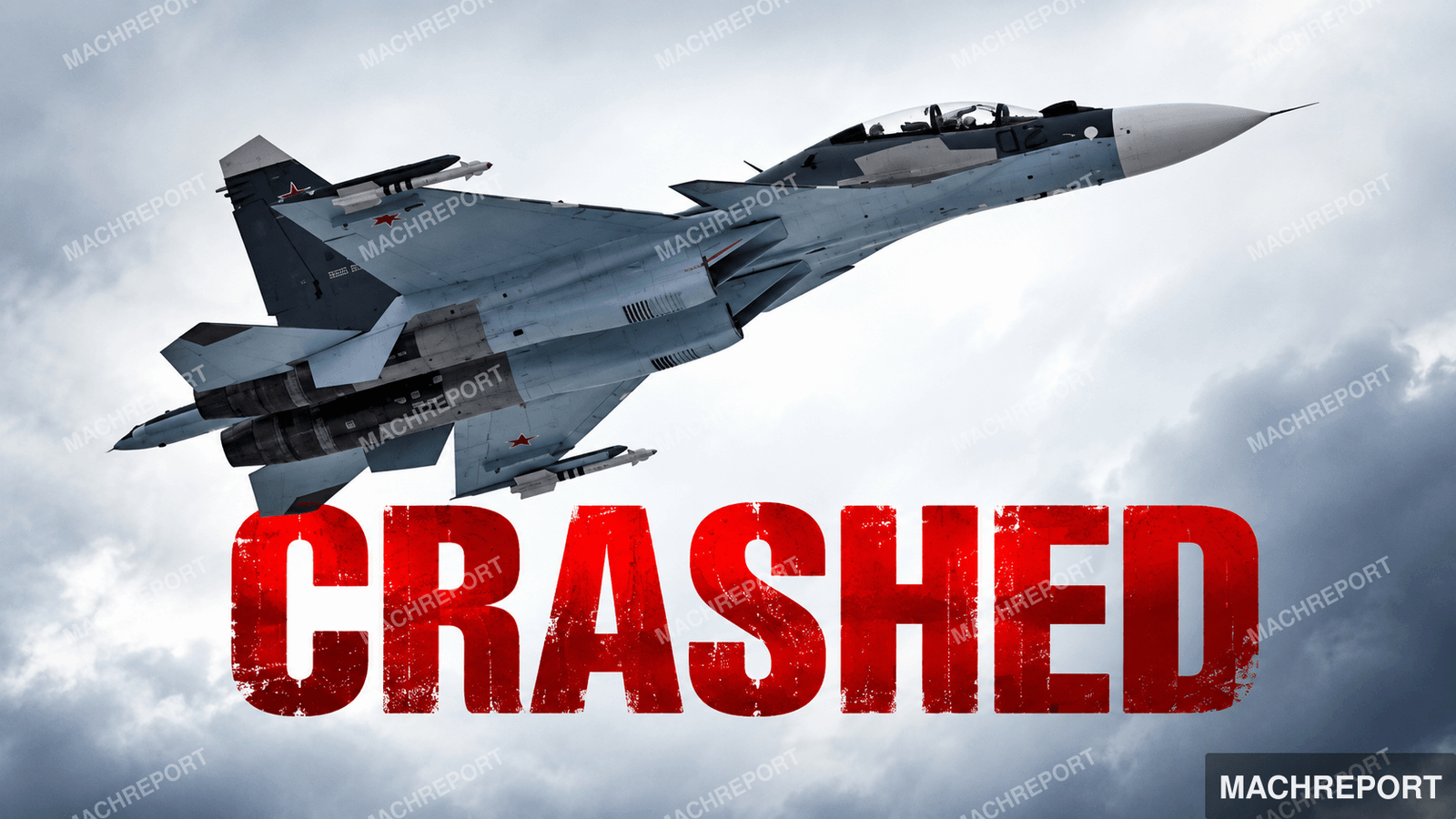
Russian Su-30 fighter jet crashes in Kaliningrad during a training flight. Both pilots eject safely as authorities investigate the cause.
A Russian Su-30 fighter jet crashed in the strategically important Kaliningrad region on October 21, 2026, during a routine military training flight. Russia's Defense Ministry confirmed that both pilots successfully ejected and were rescued, with no immediate threat to their lives. The aircraft was unarmed and crashed in an unpopulated area, while the cause of the accident remains under investigation.
Russian Su-30 Fighter Jet Crashes Near Chernyakhovsk Airbase
According to Russian authorities, the two-seat multirole fighter was conducting a scheduled training mission when it went down in western Russia's Kaliningrad exclave. The crew ejected before impact and was subsequently recovered by a search-and-rescue team.
Russian media reported that the aircraft crashed in the Chernyakhovsky district, near the settlements of Timofeyevka and Zelyony Bor. Some reports indicated that both pilots sustained injuries and were transported to a military hospital, although the Defense Ministry maintained that their lives were not in danger.
Eyewitness footage circulated on social media showed a fireball and a large column of smoke rising from the crash site near a cemetery east of Chernyakhovsk airbase. No civilian casualties or damage to populated areas were reported.
Strategic Importance of Kaliningrad
The location of the accident is significant because Kaliningrad is a heavily militarised Russian exclave situated between NATO members Poland and Lithuania, providing Moscow with an important military position along the Baltic Sea.
Chernyakhovsk airbase supports Russian naval aviation, including the Baltic Fleet's Su-30SM and Su-30SM2 multirole fighters. These aircraft can undertake air-defence, maritime strike and other combat missions, contributing to Russia's military presence in the Baltic region. The Su-30SM is a twin-engine, two-seat fighter capable of conducting air-to-air and air-to-ground operations. Its combination of radar, weapons and multirole capabilities makes it an important element of Russia's tactical aviation inventory.
Although the crashed aircraft was reportedly operating near a naval aviation facility, Russian authorities have not publicly confirmed its specific unit assignment or whether it belonged to the Baltic Fleet.
Aircraft Loss Raises Questions About Operational Readiness
The incident comes at a time when Russian military aviation is operating under significant pressure from prolonged military operations and continuing training requirements.
The loss of a multirole fighter during a routine sortie highlights the importance of aircraft maintenance, technical reliability, pilot training and flight safety. However, the cause of this particular accident has not been established, and there is currently no confirmed evidence linking it to mechanical failure, maintenance deficiencies or operational fatigue. The incident also follows a separate Russian military aviation accident in September 2026, when a bomber crashed in the Far Eastern Amur region, killing six crew members.
While individual aircraft accidents do not necessarily indicate systemic problems, repeated losses can increase demands on maintenance organisations, aircraft inventories and replacement capacity. Such pressures are especially relevant when military forces must balance operational commitments with routine training and readiness.
Implications for Russian Naval Aviation
For Russia, Kaliningrad remains an important forward military position, supporting air operations, maritime surveillance and regional deterrence. Fighter aircraft stationed in the exclave contribute to Moscow's ability to maintain an aviation presence near NATO territory and across the Baltic Sea.
The destruction of one aircraft is unlikely, by itself, to significantly alter the regional military balance. Nevertheless, the loss represents a reduction in available aviation equipment and highlights the continuing risks associated with maintaining combat-ready fleets.
The October 21 accident demonstrates that military aviation losses are not confined to active combat. Routine training, aircraft operations and technical factors can also result in the loss of expensive military platforms. For Russia, determining the cause of the crash and preventing similar incidents will be essential to maintaining the operational reliability of its tactical aviation fleet.
Comments
Login to comment
No comments yet. Start the conversation.