September Spirit: How Pakistan’s National Resolve Shapes Modern Defence
What Does September Spirit Mean Today?
On a chilling night in September 1965, the meaning of national defence was simplified in its tangible form: protecting borders, defending territorial integrity, and safeguarding population from a visible enemy. The National threat was tangible, frontlines on the battlegrounds were identifiable. From the Rann of Kutch to largest tank battle at Chowinda: the thunders of aircraft, artillery and armour left no doubt that a conflict was coming.
But now, the battlegrounds have changed.
Today, Pakistan’s national resolve is challengeable; without a conventional enemy crossing border, as the battlefield of modern defence has extended far beyond territorial frontiers. Drones can penetrate deep into its national airspace, challenging sovereignty, while long-range missiles can hit targets hundreds of kilometres away; similarly, cyber attacks activated the digital frontiers, whereas electronic warfare (EW) is able to disrupt sensors, communications and command systems. Meanwhile, all of them operate in synchronized manner, tools of disinformation target the national resolve and cohesion without firing a single shot.
The question is therefore, no longer whether the nation is able to defend itself.
With the evolution of warfare and the emergence of hybrid threats, characterised by information warfare, psychological operations (PSYOPS) and propaganda, the battlefield have expanded beyond physical territory into information space. As narratives can now be manipulated,and amplified at an unprecedented rate, truth has influenced the dynamics of modern defence in changing landscapes of battlefield..
The Invisible Battlefield: The War You May Never See Coming
Bottomline of today’s transformative landscape of battlefield is that in current fifth generation warfare (5GW), Pakistan faces an invisible enemy, where conflict begins with a viral post, a manipulated video, a cyber attack rather than an actual military deployment. In this ecosystem, information has become a weapon. Threat actors use propaganda and PSYOPS to influence public perceptions, while synchronized disinformation campaigns on social media creates chaos and mistrust challenging the National Resolve. At the same time, cyber attacks targeting government networks and sensitive databases, makes data itself a strategic asset and potential vulnerability.
For Pakistan, the September spirit is a reminder to symbolize courage, resilience and national cohesion as collaborative efforts to confront modern defence contours: protection of National integrity in both territorial and digital frontiers. The operation Bunyan um Marsoos stands as a prime example of how conflicts of modern times erupt within days of coordinated news campaigns framing narratives around the “Pahalgam Incident” in the Indian Occupied Kashmir.
When the Battlefield reinforces National Narrative
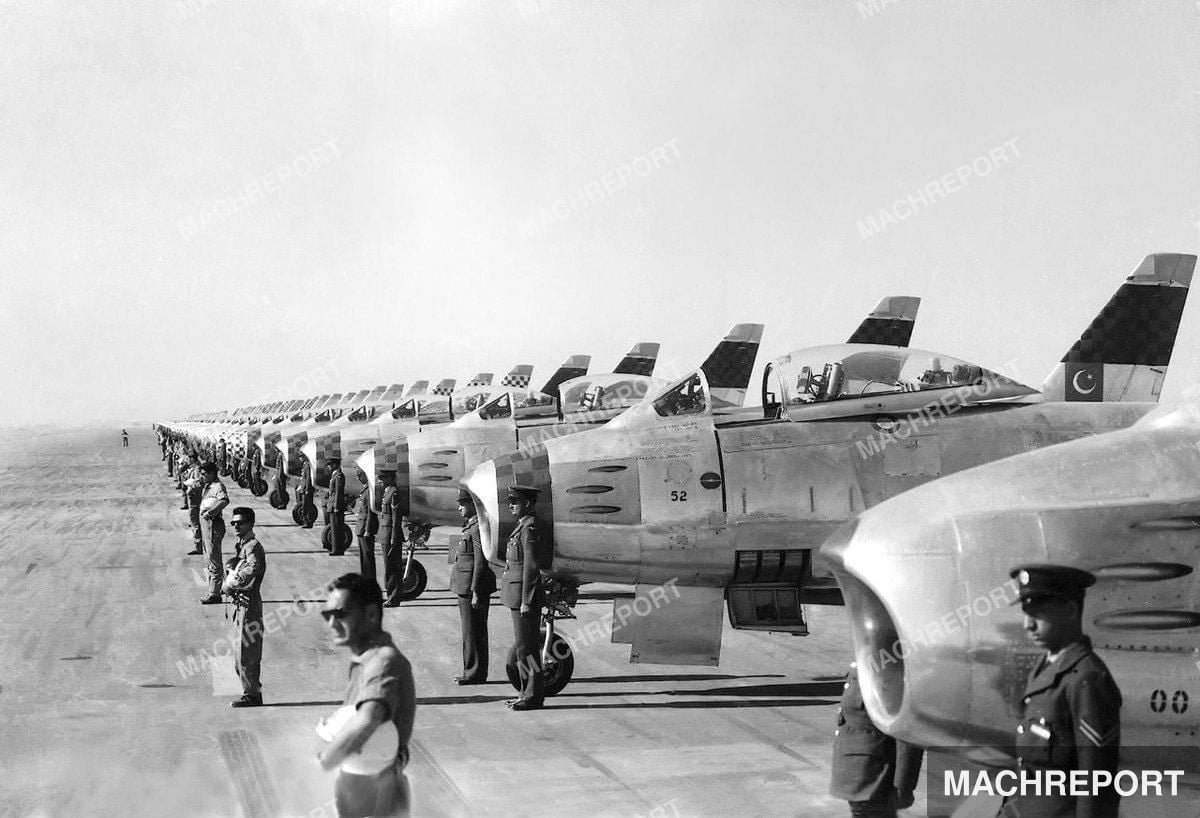
Successful events also play a decisive role in converting information superiority into National Integration. The Role of Pakistan Air Force (PAF) forces had been significant to commemorate 1965 war, proving its capability to cripple Indian Air Force dominating the skies with skill and determination. It was not just a air victory but also a psychological superiority against the numerous foe. Squadron Leader M.M Alams hunt down of five (IAF) Hawker Hunter fighter jets in under one minute created a media buzz highlighted on an International scale. Till date, Pakistani nations anticipation with the air force is expressed through increased participating in viewing fly-past exhibitions and social media trending. Similarly, the PAF’s display of domination in recent Operation Bunyan-um-Marsoos downing Rafale, Su-30MKI and Mirage 2000 rejuvenated memories of air-superiority of 1965 war.
One of the most dramatic episodes of 1965 War was the Battle of Sialkot, which began on September 8 when a major offensive was launched in Sialkot sector after failing to achieve their objectives around Lahore. The fighting established into one of the largest tank engagements in the history since the Second World War, as Pakistani forces resisting the offensive of five times larger enemy and subsequently mounting a successful retaliation forcing the enemy to retreat.
Media, National Cohesion and the Fog of War
The way military events were conveyed to the public played an decisive role in sustaining national cohesion and reinforcing resolve. Through newspapers, television and patriotic messaging, battlefield advancements were converted into a shared national narrative, allowing civilians far from the frontlines to remain psychologically connected with the forces defending the National Sovereignty.
"War is the realm of uncertainty; three quarters of the factors on which action in war is based are wrapped in a fog of greater or lesser uncertainty." - Carl von Clausewitz
The modern defence in comprehensive demonstration stood out in Bunyan um Marsoos when public retaliation fortified digital frontiers rejecting the fabricated narratives in the fog of war created deliberately via Indian Media. Along with the armed forces of Pakistan, public revitalized synergies of 1965 war marked by collaborative National resolve fueled by spiritual motivation. Despite, deployments of AI-generated Deepfakes by the Indian mainstream handles of twitter impostoring as official news channels, the active participation of Pakistani public and digital media platforms pushed back the false flag with a coordinated hashtag campaign e.g. #IndianFalseFlag, #ModiExposed and #PahalgamDramaExposed.
National Discourse as the backbone of National Resolve
The lessons from campaigns amidst full-scale launch of Bunyan-um-Marsoos in digital frontiers highlight the reality that language and ideological motivation is paramount to sustain National resolve. It dismantles the nefarious designs propagated in form of structured propaganda campaigns optimized by algorithms creating up echo-chambers. During the 1965 war, Television screens played a linguistic role integrating the Nation using symbolic communications e.g. patriotic anthems that defined the National symbols to counter the enemy in a coordinated manner.
Public morale and National cohesion through a unified narrative simplifies complex battlefield where digital behaviours become a part of National security and integrity. However, the real challenge is that the national resolve must be supported by information resilience. In this regard, National discourse becomes a fundamental element of defence because it reflects collective values, historical memory and ideological outlook through which a nation understands national security. A resilient national discourse has the ability to strengthen public morale, encouraging responsible information sharing and creating a common understanding of the challenges confronted by the country. While a fragmented or manipulated discourse can deepen divisions and weaken national cohesion.
The September Spirit, therefore, cannot remain boxed in the nostalgia of conventional war. Its modern demonstration lies in the ability of integrated state and nation to preserve National resolve and cohesion when pressure applied is simultaneously across the military, cyber, information and psychological domains.
The battlefield has modernized, but principles remain unchanged: a resolute nation is harder to coerce.
Comments
Login to comment
No comments yet. Start the conversation.