Shifting Skies: Airpower, Deterrence and the Evolving Security Order in South Asia
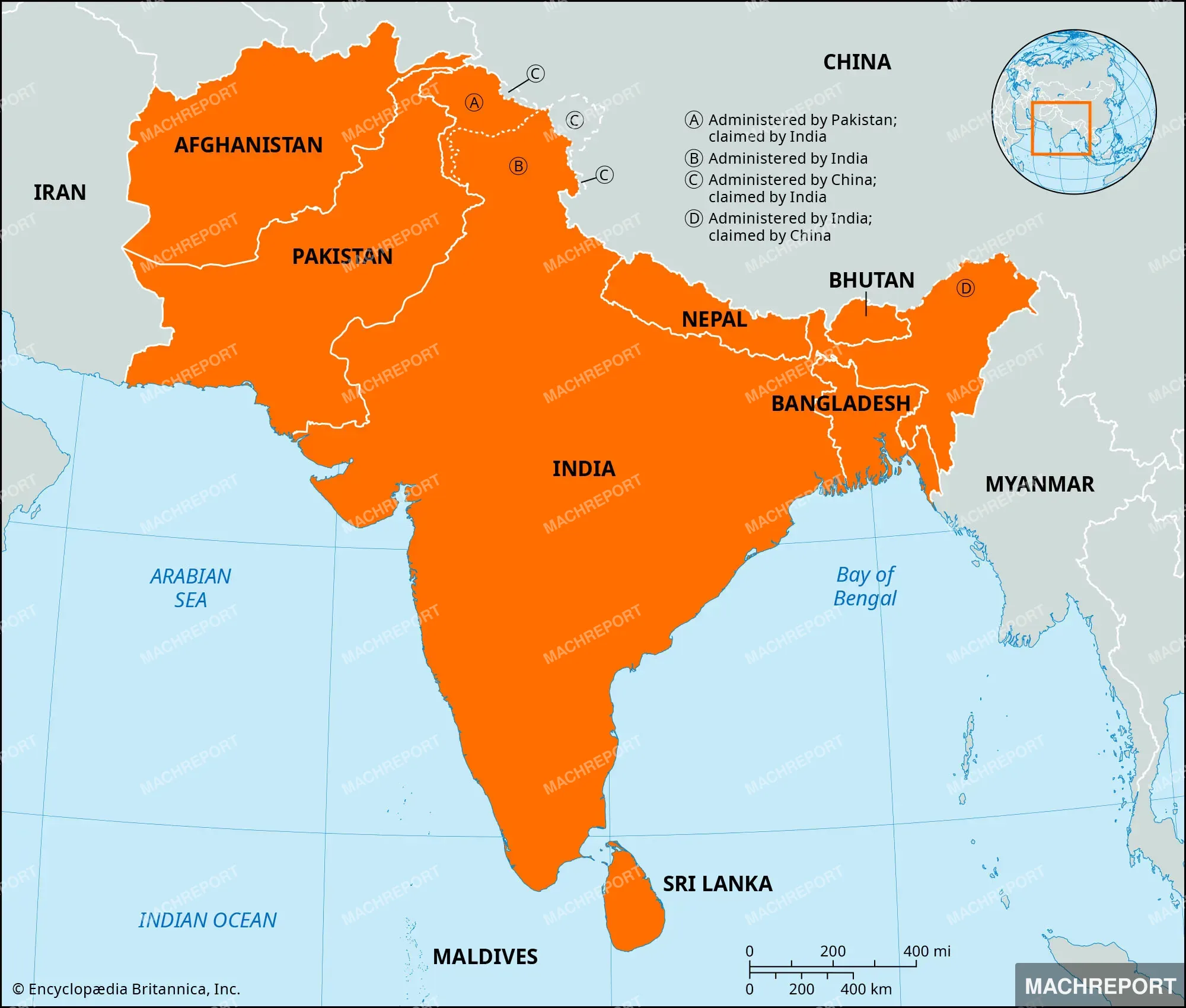
South Asian security architecture has entered a period of unusually rapid transformation, driven by hardened India-Pakistan rivalry, deepening Chinese defence integration, renewed instability along the Afghan border, and a widening regional arms competition centered on airpower rather than land forces. At the heart of this shift sits the Pakistan Air Force (PAF), an institution that has moved from being a supporting arm of Pakistan's military posture to arguably its most consequential instrument of deterrence and strategic signaling. The brief but intense conflict between India and Pakistan in May 2025, alongside Islamabad's subsequent modernization drive and its cross-border operations against militant sanctuaries in Afghanistan, has placed the PAF at the center of debates over how airpower, rather than traditional ground-force mass, is coming to define stability and risk in South Asia. Understanding these changing dynamics requires looking beyond single incidents to the structural forces reshaping the region: technology diffusion from China and Turkey, the erosion of old alliance patterns, and a growing regional consensus that the next India-Pakistan crisis, if it comes, will likely be fought first and foremost in the air.
Evolving Security Dynamics in South Asia
South Asia has entered a period of increasingly complex security competition shaped by rapid military modernization, technological transformation, strategic realignments and the emergence of new domains of warfare. The traditional security environment, largely defined by conventional land forces and nuclear deterrence, is gradually being replaced by a multidimensional framework in which air power, unmanned systems, precision weapons, cyber capabilities, space-based assets, artificial intelligence and information warfare are becoming increasingly important. At the center of these changing dynamics is the evolving strategic competition between Pakistan and India, which continues to influence the wider security architecture of the region. India’s expanding defence capabilities, including advanced fighter aircraft, integrated air-defence systems, long-range missiles, unmanned platforms and indigenous aerospace programmes, have encouraged Pakistan to continuously reassess its defence posture. At the same time, Pakistan’s growing strategic relationship with China and the increasing availability of advanced military technologies are reshaping the balance of capabilities. Within this environment, the Pakistan Air Force (PAF) has assumed a role that extends beyond conventional air defence. Its responsibilities increasingly encompass strategic deterrence, precision strike, intelligence, surveillance and reconnaissance, counter-air operations, unmanned warfare, electronic warfare and the integration of emerging technologies. The changing South Asian security environment therefore requires the PAF to remain technologically adaptive, operationally flexible and capable of responding to threats across multiple domains.
The security architecture of South Asia has historically been dominated by the rivalry between Pakistan and India. Since independence, both states have maintained large conventional military establishments while developing nuclear capabilities as a means of strategic deterrence. However, the character of this competition has changed considerably. Military power is no longer measured simply by the size of armies, numbers of tanks or quantities of fighter aircraft. Instead, technological sophistication, situational awareness, network integration, precision engagement and the ability to conduct joint operations have become essential components of national security. The introduction of sophisticated sensors, unmanned aerial vehicles, long-range precision weapons, advanced electronic warfare systems and space-enabled intelligence has created a battlefield where information and decision-making can be as important as physical firepower. Consequently, South Asian militaries are increasingly focused on developing integrated capabilities that can operate across land, air, maritime, cyber and space domains.
Transformation of Air Power in Modern Warfare
India’s military transformation is one of the most important factors influencing this evolution. New Delhi has invested significantly in modernizing its air force, missile forces, naval aviation and integrated air-defence architecture. The acquisition of advanced platforms and weapons, alongside the development of indigenous systems, reflects an effort to establish greater strategic autonomy and enhance India’s ability to conduct operations across different levels of conflict. Projects involving the Rafale, Tejas, advanced unmanned systems, long-range missiles, ballistic missile defence and indigenous fifth-generation fighter ambitions demonstrate the direction of India’s military modernization. India is also seeking to strengthen its aerospace-industrial base and develop an increasingly networked force structure. These developments have direct implications for Pakistan because any significant transformation in Indian air and missile capabilities potentially affects the regional balance and requires corresponding adjustments in Pakistan’s deterrence and defence planning.
In this changing environment, air power has become particularly significant because of its ability to generate effects rapidly across large distances. Air forces can conduct air defence, offensive counter-air operations, intelligence gathering, precision strikes and battlefield support while providing strategic flexibility to political and military leadership. The growing importance of air power is also connected to the changing nature of conflict itself. Future conflicts may not necessarily begin with large-scale conventional offensives. Instead, they could involve limited precision strikes, drone attacks, cyber operations, electronic disruption, information warfare and other forms of coercion designed to achieve political objectives without triggering full-scale war. Such an environment places a premium on rapid decision-making, persistent surveillance and the ability to respond proportionately while maintaining escalation control.
Evolving Role and Capabilities of the Pakistan Air Force
The PAF has historically played an important role in Pakistan’s national defence, but its contemporary role is becoming increasingly multidimensional. Its core responsibility remains the protection of Pakistani airspace and the maintenance of credible air superiority or air denial capabilities. However, modern air operations require much more than fighter aircraft. They depend upon a complex ecosystem involving airborne early-warning and control aircraft, ground-based radars, data links, command-and-control networks, electronic warfare, aerial refueling, precision-guided munitions and intelligence systems. The effectiveness of an air force increasingly depends on how successfully these individual capabilities can be integrated into a common operational picture. For Pakistan, strengthening this integrated architecture is essential for maintaining credible deterrence against a technologically advancing regional competitor.
One of the most important developments shaping the future of the PAF is the increasing role of unmanned systems. Drones have transformed modern warfare by providing relatively inexpensive means of surveillance, targeting, reconnaissance and strike. The widespread use of unmanned platforms in conflicts around the world has demonstrated their ability to influence battlefield outcomes while reducing risks to human pilots. For the PAF, unmanned systems can complement conventional fighter aircraft by providing persistent intelligence, surveillance and reconnaissance, supporting targeting operations and potentially conducting precision strikes. The emergence of loitering munitions further expands these possibilities by combining surveillance and strike capabilities into a single platform. However, the proliferation of drones also creates new vulnerabilities, making counter-drone and integrated air-defence capabilities increasingly important.
Another major factor is the growing importance of electronic warfare and information dominance. Modern aircraft and air-defence systems depend heavily on electromagnetic communications, sensors, navigation and data networks. Disrupting these systems can reduce the effectiveness of an otherwise technologically advanced force. Electronic warfare is therefore becoming an essential component of air operations, particularly in an environment where both sides possess sophisticated sensors and precision weapons. The PAF’s future effectiveness will depend not only on the number and quality of its aircraft but also on its ability to protect its own networks, degrade adversary systems and maintain reliable communications under contested conditions.
Artificial intelligence is likely to further transform this environment. AI-enabled systems can process enormous quantities of information from radars, satellites, aircraft, drones and other sensors much faster than traditional methods. This could improve threat identification, target prioritization, predictive maintenance and operational decision-making. The integration of AI into command-and-control systems may also shorten the time between detection and response. Nevertheless, the adoption of AI creates challenges relating to reliability, cybersecurity, human oversight and escalation management. For a nuclear-armed region such as South Asia, maintaining appropriate human control over critical military decisions will remain particularly important.
PAF and the Future of South Asian Strategic Stability
The PAF’s strategic relationship with China also has significant implications for its future development. Pakistan has increasingly relied on Chinese defence cooperation for advanced aircraft, weapons, sensors and other technologies. The development and operationalization of the JF-17 Thunder has provided Pakistan with a relatively flexible indigenous-production-oriented fighter capability, while cooperation surrounding more advanced platforms reflects Islamabad’s long-term effort to maintain technological competitiveness. Such cooperation can provide Pakistan with access to technologies that might otherwise be difficult to acquire, while simultaneously encouraging the development of domestic aerospace expertise. However, dependence on external suppliers also creates challenges related to sustainability, supply chains, technology transfer and long-term industrial independence. Developing indigenous capabilities will therefore remain an important element of Pakistan’s future air-power strategy.
The evolving South Asian security environment also demands greater emphasis on jointness. No modern air force can operate effectively in isolation from the army, navy, intelligence agencies and strategic forces. Air operations increasingly depend upon information generated by satellites, ground-based sensors, maritime platforms and intelligence networks. Similarly, air power can provide critical support to land and maritime forces. The future battlefield is therefore likely to be characterized by multi-domain operations in which different military services share information and coordinate effects through interconnected command structures. For Pakistan, enhancing jointness between the PAF and other elements of the armed forces can strengthen deterrence while improving the ability to respond to complex and rapidly developing crises.
Perhaps the greatest challenge for the PAF is maintaining a credible balance between modernization and sustainability. Advanced aircraft and weapons are expensive not only to acquire but also to operate and maintain. Training pilots, developing engineers, maintaining aircraft availability, securing spare parts and continuously upgrading electronic systems require long-term investment. A sustainable air-power strategy therefore cannot focus exclusively on acquiring new platforms. It must also strengthen domestic maintenance, research and development, aerospace manufacturing, pilot training and technological education. The development of a capable domestic defence-industrial base can reduce external vulnerabilities and allow Pakistan to adapt more rapidly to changing technological requirements.
The broader strategic objective should be to preserve deterrence while avoiding unnecessary escalation. South Asia’s nuclear dimension makes military competition particularly sensitive. Advances in precision strike, missile technology, surveillance and air power can increase military effectiveness but may simultaneously create concerns about strategic stability. The challenge for the PAF and Pakistan’s wider defence establishment is therefore to develop sufficient capabilities to deter aggression without creating incentives for uncontrolled escalation. Effective deterrence requires not only military strength but also clear signaling, crisis communication and an understanding of the adversary’s perceptions and red lines.
The changing dynamics of South Asian security demonstrate that the future of regional stability will increasingly depend on technological adaptation, credible deterrence and the ability of states to manage competition responsibly. The PAF occupies a central position within Pakistan’s response to these developments. Its role is expanding from traditional air defence toward a broader concept of integrated air and aerospace power involving advanced combat aircraft, unmanned systems, precision weapons, electronic warfare, intelligence networks, artificial intelligence and multi-domain operations. Maintaining effectiveness will require continuous modernization, indigenous technological development, professional training and stronger integration with Pakistan’s wider defence architecture. Ultimately, PAF’s importance in South Asian security will not be determined simply by the number of aircraft it operates, but by its ability to integrate technology, people, information and strategy into a credible and sustainable deterrent. As the regional security environment becomes more technologically sophisticated and strategically uncertain, an adaptive and resilient PAF will remain a critical component of Pakistan’s national security and the broader balance of power in South Asia.
Comments
Login to comment
No comments yet. Start the conversation.