Tarang Shakti 2026: India’s Multinational Air Power Strategy
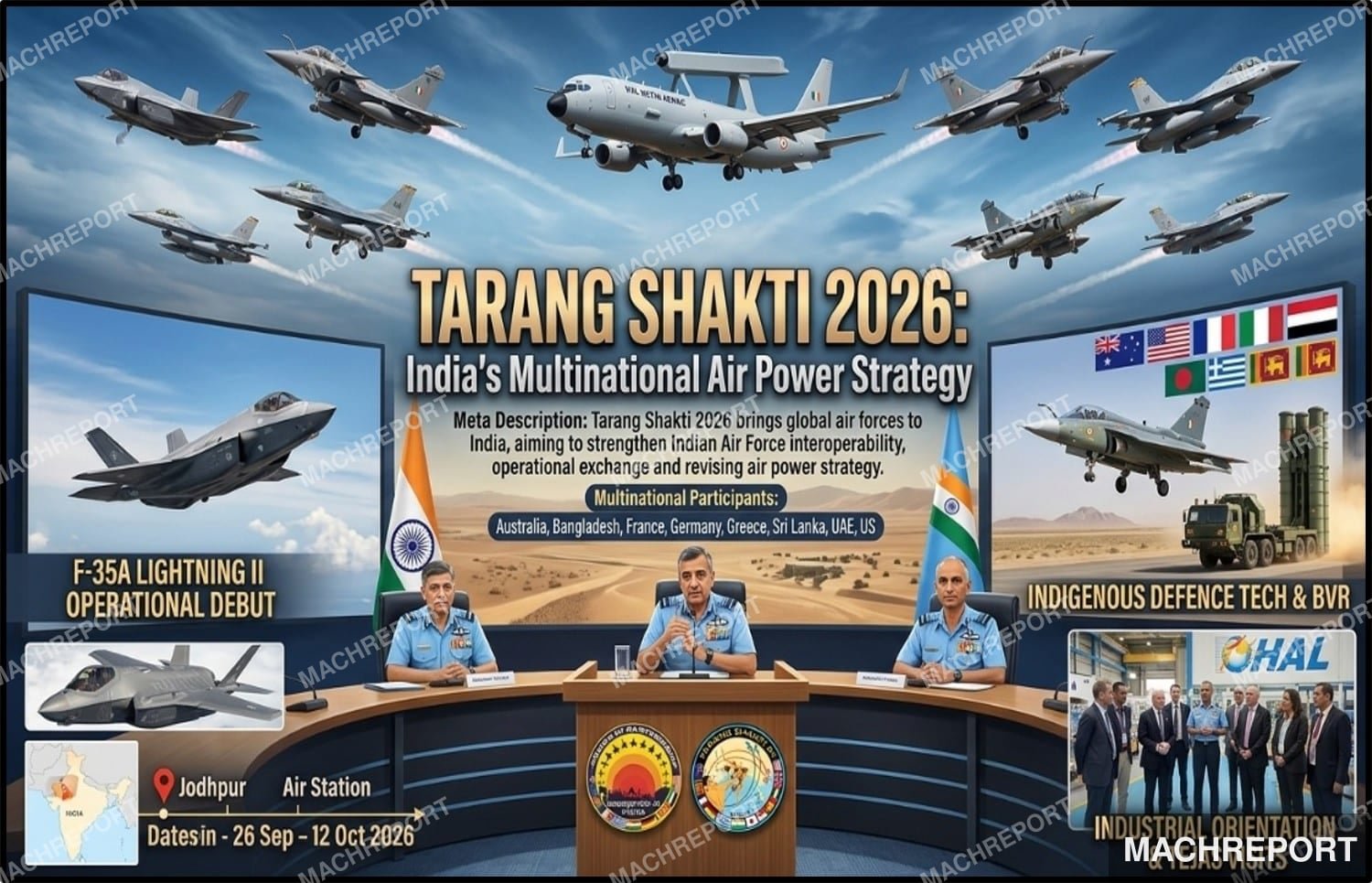
Tarang Shakti 2026 brings global air forces to India, aiming to strengthen Indian Air Force interoperability, operational exchange and revising air power strategy.
Indian air force is conducting second edition of Tarang Shakti 2026 scheduled from 26 September, 26 – 12th October, 26, that envisages to develop interoperability, operational exchange and multinational air-combat integration while exposing its personnel to different aircraft, tactics and combat employment strategies. As 32 Observers are set to assess multinational combat integration and counter-UAS capabilities, eight countries are the participants of this exercise including, Australia, Bangladesh, France, Germany, Greece, Sri Lanka, the UAE and the United States deploying air assets such as F-35s, French Rafales, UAE F16’s and indigenous Tejas fighter jets.
The venue for this multi-national exercise at Jodhpur Air Station, holds a strategic importance yet again after conclusion of its Veer Guardian exercise with Japan in a close proximity with Pakistani border.
Core Operational Focus of Multinational Air Exercise:
The core operational focus of the second edition of Exercise Tarang Shakti is to expose the participant forces for planning and execution of multinational joint combat operations in a modern realistic battle environment, emphasized on operational cooperation, tactical training, and Air Force Interoperability.
The Multinational Air Exercise aims to achieve tactical objectives like featuring India’s indigenous Defence technologies comprising of HAL LCA Tejas, Netra AEW&C and integrating 4.5 with 5th generation platforms. Moreover, it involves Large Force Engagements (LFE) that covers BVR combat, dynamic targeting and EW. The Joint air-to-air refuelling drills in the exercise with foreign tanker aircraft aims at enhancing long-range operations.
Aircraft participations in Tarang Shakti 2026
As per Indian Ministry of Defence, the fleets of the Multinational Air Exercise deployed by Foreign Contingents combine both advanced combat and support assets including the following:
(a) Lockheed Martin F-35A Lightning II of US
(b) General Dynamics F-16 of UAE
(c) Dassault Rafale of France
(d) C-130 and C-130J Super Hercules transport aircraft
(e) A400M airlifters
(f) MRTT refueling aircraft
(g) KC-30 A air-to-air refueling tanker of Australia.
Together this merges diverse strike, tactical airlift, and aerial refuelling capabilities. Some sources highlight that the combination of aircraft fleets will let the participant nations to understand how the integration helps as per operational requirements.
Operational Exercise Debut of F-35A Lightning II
On 26 September, 26, the US ambassador to India confirmed in his tweet regarding the participation of F-35A Lightning II for its first-ever participation in an operational exercise. Open sources claim that around six F-35A Lightning II have been deployed by the US Air Force along with 200 airmen aimed to strengthen coordination and combat readiness. The induction of US F-35 fighters marks deeper-level of integration between the US and India to build air force interoperability and exchange of tech expertise.
The participation of stealth F-35A Lightning II came at a time when US approved a $24.3 billion arms deal of 48 F-35 Lightning 11’s warplanes to Saudi Arabia, despite risks of Chinese Intelligence to acquire the F-35 technology. It is pertinent to note that Pakistan has already signed a comprehensive deal with China to become the first operator of Chinese J-35A Fighters, gaining a competitive edge in the South-Asian region transforming to fifth-generation fighters. As per analysis, India intends to gain an upper hand in this race to acquire fifth-generation in advance since it majorly relies on 4.5-generation fleets like the French Rafale and Russian Su-30MKI. The F-35’s debut at Tarang Shakti would benefit India providing an ultimate radar test of S-400 against a real stealth-aircraft to counter China and Pakistan air power. However as per analysis India faces procurement challenges due to slow decision-making process lacks effective prioritization of aircrafts.
How exercise connects participants with Industries
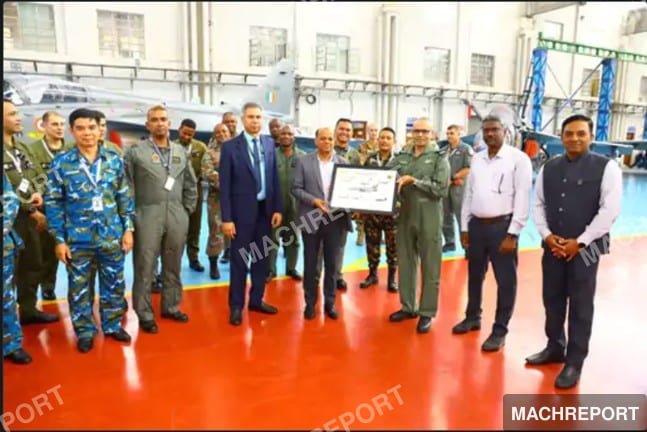
It has been reported by the Indian sources that about 28 delegations came from different countries to visit Indian Defence enterprises based in Bengaluru observing strengths of India’s indigenous production. The Foreign Contingents visited the domestic aerospace companies such as Hindustan Aeronautics Limited (HAL), Bharat Electronics Limited (BEL) and the National Aerospace Laboratories (NAL). Those from the visitors include Brazil, Maldives, Thailand, Côte, Peru, Algeria, Nigeria, d'Ivoire and Indonesia.
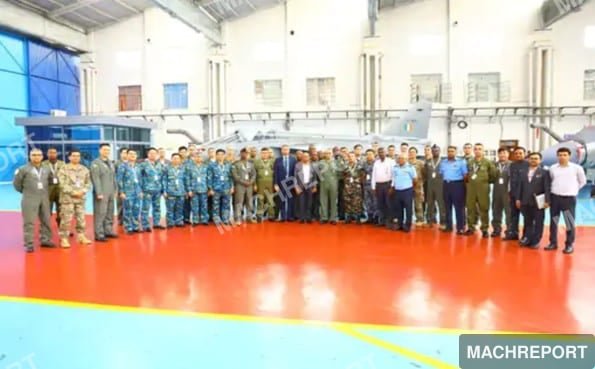
The friendly countries were informed regarding technology behind advanced radar systems, missile defence guidance and cockpit electronics being manufactured for the Indian armed forces. Furthermore, Foreign Contingents explored assembly lines for Tejas fighter aircraft and Prachand attack helicopter at HAL. This foreign exchange signals Indian plans for future Air Force Interoperability with the friendly States.
Interactions beyond Exercise:
This latest edition of this Multinational Air Exercise carries a broader dimension beyond flying operations, with a range of outreach activities planned with the Foreign Contingents during the exercise. These include seminars and industrial orientation. Reports say that such engagements will provide opportunities for professional exchange, exposure to India's aerospace and industrial ecosystem, and greater interaction among the participating contingents.
Comments
Login to comment
No comments yet. Start the conversation.