The Direct US – Iran Confrontation and Maritime Chaos
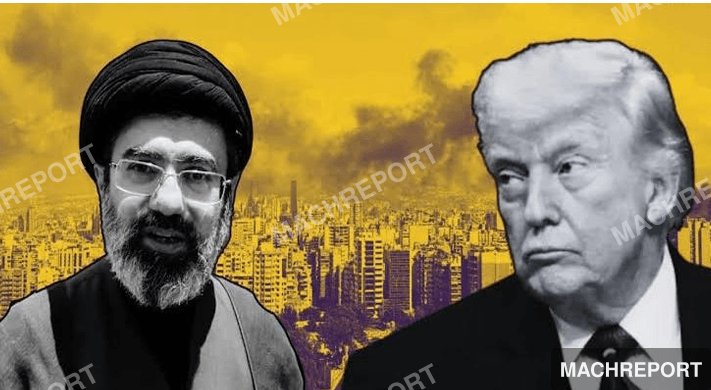
The era of predictable proxy warfare in West Asia has officially ended. The long-simmering shadow war between Washington and Tehran has boiled over into direct, kinetic military exchanges, profoundly unsettling global markets and security architectures.
U.S. forces and Iranian military assets are locked in a volatile cycle of missile strikes retaliatory and that drone have effectively turned the region’s primary trade corridors into active combat zones. The immediate fallout is concentrated around critical maritime choke points, most notably the Strait of Hormuz and the Red Sea. Shipping volumes through these arteries have collapsed to historic lows. Rather than risking catastrophic hull losses or exorbitant insurance premiums, international shipping conglomerates are entirely bypassing these routes. This shift has triggered structural gridlock in global logistics. The demand for Very Large Crude Carriers (VLCCs) on traditional long-haul journeys has plummeted, replaced by inefficient, short-haul shuttle operations designed to skirt high-risk sectors.
This chaos has injected severe volatility into global energy supplies. Western economies, already struggling with persistent inflation, face the constant threat of supply shocks. In response to the crisis, regional alignments are shifting rapidly. Sensing a potential reduction in long-term American security guarantees, Saudi Arabia has spearheaded an unexpected, pragmatic joint defence pact. This coalition which significantly draws on Pakistan’s conventional military capabilities aims to establish a regional counterweight to Iranian influence. Concurrently, Washington has intensified its financial containment strategies, enforcing strict sanctions that push Tehran deeper into alternative, non-Western economic networks.
The Fragmentation of the Transatlantic and Western Alliance
Simultaneously, the foundational consensus of the Western rules-based order is fracturing from within. A dramatic shift in U.S. foreign policy has introduced unprecedented friction between Washington and its closest historic allies, replacing decades of institutional cooperation with transactional, unilateral diplomacy.
The starkest manifestation of this rupture is a severe diplomatic crisis between the United States and Europe over Greenland. Unilateral U.S. security and tariff manoeuvres regarding the territory have stunned European leadership. At recent global forums like Davos, representatives from traditionally staunch American allies, including Canada and key European powers, have openly warned of a fundamental break in the international order. This friction suggests that the post-World War II security umbrella can no longer be taken for granted, forcing European states to seriously contemplate independent strategic autonomy.
This assertive American posture is equally evident in Latin America. In early 2026, U.S. forces executed a highly controversial operation that resulted in the capture of Venezuelan President Nicolás Maduro, transporting him to the United States to face legal charges. This action shattered traditional diplomatic protocols and ignited intense legal and political debates across the Western Hemisphere regarding national sovereignty. Combined with a significantly expanded U.S. military footprint around the Panama Canal to secure logistics pathways, local neutrality laws are being pushed to their absolute limits, breeding deep resentment across regional capitals.
The Economically Exhausting War of Attrition in Ukraine
In Eastern Europe, Russia-Ukraine war has ossified into a brutal, economically devastating conflict of attrition. The strategic dynamics have shifted significantly due to acute material deficits. Ukraine is grappling with a severe shortage of air defence interceptors, a vulnerability that Russian forces have systematically exploited. By launching relentless missile and drone barrages, Moscow has succeeded in inflicting deep, systemic damage on Ukraine’s core electrical grid and industrial infrastructure, severely undermining its wartime economic viability.
However, Kyiv has adapted by launching an aggressive asymmetric campaign of its own. Utilizing highly advanced, long-range indigenous drone fleets, Ukraine has repeatedly struck deep inside Russian territory, targeting vital oil refineries and processing facilities. These strikes have successfully disrupted Russia’s domestic energy architecture, forcing Moscow to implement strict bans on diesel and refined fuel exports to protect its internal market. This cross-border economic warfare has kept global refined product inventories dangerously low, sustaining high fuel prices across North America and Europe, and demonstrating that modern conflicts are won or lost in the economic sphere.
Fluid Alliances and Gray-Zone Tactics in the Indo-Pacific
In the Indo-Pacific, the strategic competition between Washington and Beijing has evolved far beyond static, Cold War-style blocs into a fluid, highly unpredictable security environment. Washington’s sudden decision to scale back long-standing joint military exercises with South Korea has sent shockwaves through East Asia. This move has introduced deep anxiety regarding the reliability of the American nuclear umbrella, prompting regional players to explore alternative security arrangements and bolster their domestic defence capabilities.
Recognizing this fluid environment, Australia has stepped into a more assertive regional role. Canberra is rapidly constructing an intricate web of political and security alliances across the Pacific Island nations, explicitly designed to check China’s maritime expansion and preserve open sea lines of communication.
Meanwhile, Beijing has refined its strategy toward Taiwan. Deviating from the widely anticipated scenario of a kinetic amphibious invasion, China is heavily relying on "gray-zone" tactics. By combining continuous naval blockades, cyber incursions, economic coercion, and psychological operations, Beijing maintains a state of deliberate ambiguity. This approach effectively holds Taiwan’s democratic governance and tech-centric economy hostage, aiming to exhaust the island's societal resilience without crossing the threshold that would trigger a direct, large-scale military intervention by Western powers.
The Emergence of Tech Sovereignty and Block-Based Cold War
Beyond geographical borders, geopolitics has entirely consumed the global tech sector, permanently fracturing the international corporate landscape. The primary battleground is no longer just physical territory or fossil fuels, but the sovereign control over Artificial Intelligence and quantum computing.
As AI systems rapidly transition from analytical tools to holding autonomous authority over sensitive military command structures, global financial networks, and critical civil infrastructure, the race for technological dominance has reached a fever pitch. This has led to an aggressive balkanization of technology. The world has fractured into two distinct, competing technological ecosystems centered around the United States and China.
This era of intense data nationalism has brought an end to meaningful international scientific collaboration. Fearing espionage and the weaponization of intellectual property, states are enforcing strict data localization laws and sweeping export controls on advanced semiconductors and quantum research. For the global corporate sector, the implications are severe. Over half of the world's multinational corporations have been forced to split their operations, rewrite their software stacks, and completely duplicate their supply chains to comply with the irreconcilable regulatory regimes of these competing ideological blocs.
Comments
Login to comment
No comments yet. Start the conversation.