The Iran War and New Test of US Airpower
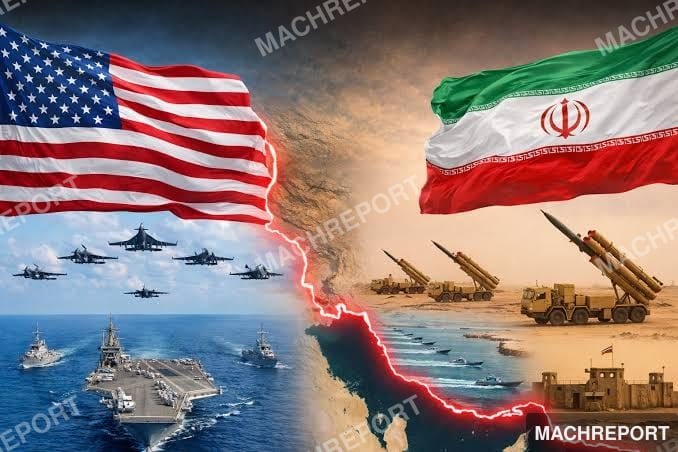
The Iran war is revealing a less conventional measure of airpower: not simply ability to destroy targets, but capacity to absorb attrition, sustain operations and preserve combat power over a prolonged conflict.
The US-Iran war has entered a phase in which balance of air power can no longer be assessed simply through number or sophistication of aircraft involved. The United States has employed some of world's most advanced military aircraft, including F-35s, F/A-18s, F-15Es, bombers, tankers and unmanned systems, while Iran has relied on ballistic and cruise missiles, drones and the air-defence capabilities that survived the opening stages of the campaign.
The result is an increasingly asymmetric contest. United States has greater reach, precision and aviation capability, but Iran does not need to match those capabilities platform for platform. Its strategy has increasingly centred on maintaining enough missiles, drones and surviving systems to continue imposing costs on US forces and their regional infrastructure. That dynamic raises a broader question for modern military aviation: how much pressure can a technologically superior force absorb before the cost of maintaining its advantage begins to affect its wider strategic options?
Iran's Ability to Continue Fighting
The most revealing feature of campaign has been Iran's ability to retain offensive capacity after extensive attacks on its military infrastructure. In July, Iranian missile attacks were becoming more precise, with analysts pointing to use of different trajectories, speeds, dispersed launch locations and decoys to complicate interception. A subsequent analysis noted that Iran had retained the ability to inflict casualties and damage on US positions despite months of intensive strikes.
This does not mean that Iran's military infrastructure escaped severe damage. Its conventional air force and many air-defence systems have reportedly suffered substantial losses. But the survival of its missile and drone forces has prevented the conflict from becoming a one-sided contest. The distinction is important. Iran does not need to establish conventional air superiority. Its objective can instead be to deny United States a low-cost, low-risk operating environment. That approach has strategic value because US forces operate from fixed or semi-fixed installations across Gulf and surrounding region. According to analysts roughly 50,000 US personnel have been operating from locations within range of Iranian missiles and drones.
The Cost Asymmetry
This is where the campaign becomes particularly significant for defense technology. Iran's missiles and drones are generally cheaper to produce than systems used to detect and intercept them. A single successful interception can therefore represent a tactical success while still contributing to an unfavourable long-term cost exchange.
Patrick Bury, a former NATO research analyst described this as an “asymmetry of cost imposition”: Iranian drones and missiles are substantially cheaper than the systems required to intercept them. The implication extends beyond battlefield. If inexpensive weapons can repeatedly force the expenditure of high-value interceptors, the critical resource eventually becomes magazine depth, not technological sophistication. This is particularly significant for United States because its missile inventories are also required for potential contingencies elsewhere.
The Missile Stockpile Problem
The pressure on US inventories has become one of the defining issues of the war. United States had expended approximately half of at least four critical categories of munitions since the beginning of the conflict, with replenishment potentially taking months or years depending on the weapon. Analysts warned that weapons being consumed in Iran could also be required in a future conflict with China.
By August, concerns had increasingly focused on Patriot interceptors. US Patriot inventories had fallen from roughly 2,300 before the war to fewer than 827, based on CSIS assessments. President Trump and Pentagon officials have disputed some claims concerning the severity of shortages, making precise inventory figures difficult to establish independently. Nevertheless, the underlying problem is difficult to dismiss.
A modern air defense network is only as sustainable as its interceptor supply. Radar systems can remain operational, command networks can continue functioning and aircraft can continue flying, but a force cannot indefinitely defend a large battlespace if its most sophisticated interceptors are consumed faster than they can be manufactured. This turns the Iran war into an industrial competition as much as an aviation campaign.
Aircraft Losses and the Persistence of Risk
The same principle is visible in aviation. US forces have suffered the loss of crewed aircraft during campaign, while Iranian forces have continued to claim destruction of American unmanned systems. Iranian forces also shot down MQ-9 Reapers and other US drones even after significant degradation of Iranian air-defence networks.
The loss of at least 45 MQ-9 Reapers by 13 August, equivalent to roughly one-quarter of fleet, is particularly significant because it illustrates vulnerability of conventional remotely piloted aircraft in contested environments. The Reaper was designed around persistence and surveillance rather than high-end survivability. Its attrition therefore points towards a wider transformation in aviation technology: future unmanned systems will increasingly need to operate in environments where electronic warfare, air defence and long-range missiles are present.
The Wider Lesson for Airpower
The implications extend well beyond Iran. For air forces studying fighter aircraft, campaign reinforces limits of platform-centric comparisons. Rafale, F-16, JF-17 Thunder, J-10C, Tejas and future fifth- and sixth-generation fighters cannot be evaluated solely through radar range, missile performance or manoeuvrability. An effective air force also requires tankers, airborne early-warning systems, electronic warfare, air defence, secure communications, maintenance infrastructure, trained personnel and deep weapons inventories.
For Pakistan Air Force and Indian Air Force, this is an important consideration for future fighter jet comparison and force planning. Iran war demonstrates that an aircraft's value ultimately depends on wider ecosystem supporting it. The same applies to combat drones. The next generation of unmanned aircraft will likely be more distributed, autonomous and survivable, while high-end crewed fighters increasingly operate as command nodes within larger networks.
The Iran war is therefore becoming a test of something broader than American aircraft or Iranian missiles. It is a test of endurance. Iran has suffered extensive damage, yet its ability to continue launching missiles and drones demonstrates that destroying military infrastructure does not necessarily eliminate a state's capacity to wage asymmetric warfare. United States, meanwhile, retains considerable advantages in aviation and precision strike, but prolonged operations are consuming aircraft hours, unmanned platforms, interceptors, weapons and carrier availability. The central strategic issue is consequently the relationship between capability and sustainability.
A technologically advanced air force can dominate individual engagements and still face difficult choices when weapons stocks decline, deployments lengthen and another strategic theatre demands attention. The Iran war is thus providing a broader lesson for modern air power: the decisive advantage may not belong exclusively to side with most advanced aircraft. It may belong to the side that can sustain its chosen level of military pressure for longest period while preserving enough weapons, platforms and industrial capacity to fight next conflict.
Comments
Login to comment
No comments yet. Start the conversation.