Türkiye Defence Industry and Pakistan’s Emerging Air-Defence Architecture: Strategic Opportunities, Operational Gains and the Limits of Defence-Industrial Dependence
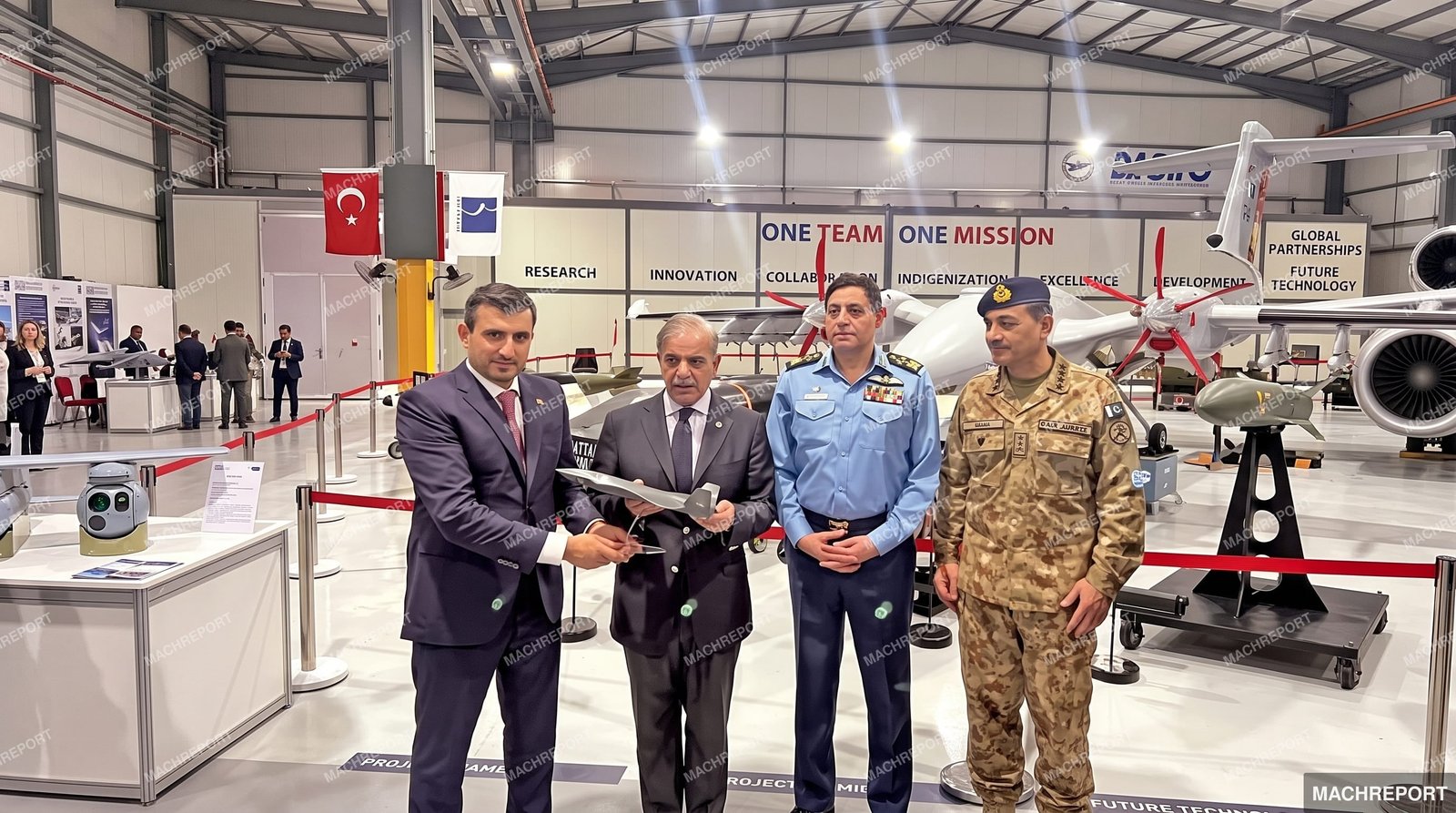
The deepening defence relationship between Pakistan and Türkiye is becoming an important component of South Asia’s evolving strategic and technological environment. The reported appearance of the Turkish ASELSAN KORKUT 35 mm self-propelled air-defence system in Pakistan, alongside the Turkish ŞAHİN counter-UAS system and Chinese HQ-17AE, indicates an emerging emphasis on layered and networked air defence. This development is particularly relevant as unmanned aerial vehicles (UAVs), loitering munitions, cruise missiles and precision weapons increasingly challenge conventional air-defence systems. Beyond individual acquisitions, Türkiye’s expanding defence-industrial ecosystem provides opportunities for Pakistan in air defence, UAVs, electronic warfare, aerospace, precision weapons, joint production and research and development. However, the strategic value of this relationship will depend on Pakistan’s ability to convert procurement into technological absorption, local production, sustainment and indigenous capability. Pakistan–Türkiye defence cooperation can serve as a force multiplier for Pakistan, but its long-term strategic value will depend on whether defence procurement develops into sustainable technological and industrial interdependence rather than another form of external dependency.
KORKUT and Pakistan’s Emerging Layered Air Defence
KORKUT’s principal significance for Pakistan lies in its role as an inner layer of air defence rather than as a replacement for longer-range systems. The platform combines radar-directed twin 35 mm guns, electro-optical sensors and programmable airburst ammunition. Such ammunition is designed for engaging threats including UAVs, cruise missiles and air-to-surface weapons. Its relatively economical engagement mechanism is particularly relevant in an environment where employing expensive surface-to-air missiles against inexpensive drones can produce an unfavourable cost exchange.
Pakistan’s emerging architecture reportedly places the HQ-17AE in a longer short-range layer, KORKUT closer to defended assets and ŞAHİN as a final counter-UAS barrier. Such layering could strengthen the protection of airbases, radar installations, command centres, logistics facilities and other critical infrastructure. Nevertheless, acquisition alone cannot guarantee effectiveness. The operational outcome will depend upon system numbers, sensor coverage, data links, ammunition stocks, trained crews, command-and-control integration, electronic-warfare resilience and logistics.
Türkiye Defence-Industrial Transformation
The wider importance of KORKUT lies in the defence-industrial ecosystem behind it. Türkiye has developed capabilities spanning UAVs, missiles, electronic warfare, radars, sensors, air defence, naval platforms and aerospace technologies. The Steel Dome concept illustrates this transformation by integrating sensors, weapons and command-and-control capabilities through a unified network. Major Turkish defence companies, including ASELSAN, ROKETSAN, MKE and TÜBİTAK SAGE, contribute to this broader ecosystem.
For Pakistan, engagement with Türkiye therefore offers more than access to individual weapon systems. It creates opportunities to diversify technological partnerships while acquiring capabilities relevant to contemporary warfare. However, diversification should not simply mean replacing dependence on one external supplier with dependence on another. Its strategic value lies in Pakistan’s ability to integrate foreign technologies into a sovereign command structure while progressively developing domestic industrial support.
Counter-UAS and Technological Cooperation
Counter-UAS warfare represents one of the most promising areas for Pakistan–Türkiye cooperation. Türkiye possesses growing expertise in UAVs, counter-UAS systems, sensors, electronic warfare and precision weapons, while Pakistan has established defence-production and aerospace capabilities. Combining these strengths could allow the relationship to move beyond conventional buyer–seller dynamics.
The more sustainable model would involve Turkish technology and engineering expertise being progressively combined with Pakistani manufacturing, maintenance, software integration, component production and system upgrades. Such cooperation could enhance Pakistan’s ability to sustain systems during prolonged crises while developing domestic human capital and technological expertise.
The unmanned domain provides a particularly important opportunity. Joint work in artificial intelligence, autonomous systems, sensors, communications and precision weapons could contribute to an indigenous Pakistani unmanned ecosystem. The emerging Pakistan–Türkiye–Saudi Arabia defence framework could further expand such cooperation through joint technology development and production. However, political agreements alone cannot create an integrated defence-industrial complex; interoperability, common standards, financing, logistics and concrete industrial programmes remain necessary.
Strategic Benefits and Defence-Industrial Autonomy
Türkiye’s defence industry can provide Pakistan with several strategic benefits. First, it can strengthen Pakistan’s layered air-defence architecture against increasingly diverse low-altitude threats. Second, cooperation can broaden Pakistan’s technological options and reduce excessive concentration on a single foreign source. Third, joint production and technology transfer could improve domestic sustainment and industrial capacity.
The deeper strategic objective should therefore be selective autonomy rather than complete self-reliance. Complete defence-industrial independence is difficult even for major powers. Pakistan can instead seek sovereign control over critical technologies while using trusted foreign partnerships to accelerate indigenous development. Türkiye’s own evolution from external dependence towards greater domestic production provides a potentially relevant model.
Limitations and Challenges
Despite its potential, Turkish defence cooperation cannot by itself resolve Pakistan’s air-defence vulnerabilities. KORKUT has a limited engagement envelope and cannot replace long-range surveillance, fighter aircraft, medium- and long-range surface-to-air missiles, electronic warfare or hardened infrastructure. Its value depends on integration with the wider air-defence network.
Furthermore, networked air defence creates vulnerabilities of its own. Radars, communications links and command systems can be targeted through electronic warfare, cyber operations, suppression of enemy air defences and anti-radiation weapons. Sustained combat effectiveness also requires adequate ammunition, spare parts, trained personnel and secure logistics.
Financial sustainability presents another challenge. Pakistan faces simultaneous modernisation requirements across the air force, army, navy, air defence and unmanned warfare. Every acquisition generates lifecycle costs involving training, maintenance, ammunition, infrastructure and upgrades. Procurement should therefore be driven by long-term force-structure requirements rather than the attractiveness of individual platforms.
Conclusion
Türkiye’s defence industry has emerged as an important force multiplier for Pakistan by strengthening its air-defence architecture, counter-UAS capabilities and access to advanced military technologies. The reported integration of systems such as KORKUT illustrates a shift towards a layered and networked approach to contemporary aerial threats. However, the long-term value of the relationship will depend on technology transfer, joint production, indigenous maintenance and Pakistan’s ability to absorb and develop critical technologies. Ultimately, Pakistan–Türkiye defence cooperation should evolve from a procurement relationship into a genuine defence-industrial partnership capable of enhancing deterrence, resilience and technological autonomy.
Comments
Login to comment
No comments yet. Start the conversation.