US Military GPS Modernization Faces Coordination Challenges
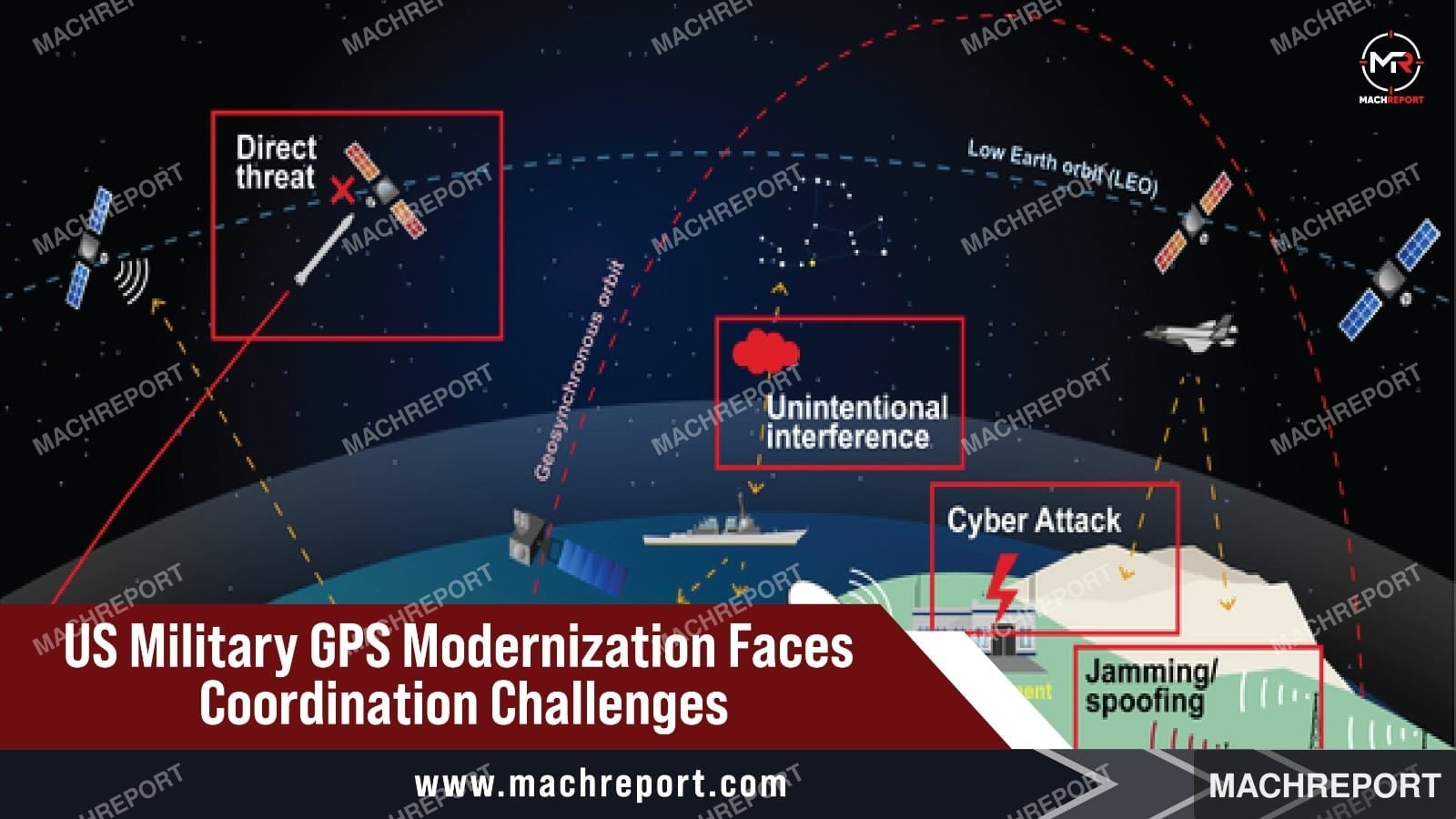
US Military GPS Modernization faces delays and coordination challenges as Pentagon develops alternative navigation systems to counter GPS threats.
US Military GPS Modernization Amid Growing Security Threats
The United States Department of Defense (DoD) is intensifying efforts to modernize its Global Positioning System (GPS) and develop alternative navigation capabilities amid growing concerns over the vulnerability of satellite-based positioning systems to electronic warfare. However, an October 07, 2026, report by the Government Accountability Office (GAO) has highlighted significant coordination challenges, technological delays, and overlapping development programmes across the US military services. The report warns that fragmented efforts could undermine operational readiness and delay the deployment of critical navigation technologies needed in increasingly contested military environments.
GPS remains indispensable to modern warfare, supporting precision-guided munitions, unmanned aerial systems, intelligence operations, military logistics, and coordinated battlefield maneuvers. Beyond defence applications, the system underpins critical civilian infrastructure, including aviation, telecommunications, financial transactions, and transportation networks. Consequently, disruptions to GPS services could have far-reaching implications for both national security and economic stability.
Growing GPS Satellite Vulnerabilities in Modern Warfare
The increasing sophistication of electronic warfare capabilities has exposed fundamental weaknesses in satellite-dependent military operations. GPS signals are particularly susceptible to jamming, which obstructs legitimate satellite transmissions, and spoofing, which manipulates navigation receivers through deceptive signals. These threats become especially significant during high-intensity conflicts involving technologically advanced adversaries.
Recent combat experiences in Ukraine have demonstrated the operational consequences of GPS interference. Russian electronic warfare activities have degraded the effectiveness of certain GPS-guided precision weapons, while both sides have employed spoofing techniques to disrupt navigation services. Such developments underscore the risks associated with excessive dependence on space-based navigation and reinforce the strategic importance of developing resilient alternatives.
For the Pentagon, maintaining reliable positioning, navigation, and timing capabilities is essential to sustaining precision strike operations, force coordination, and battlefield effectiveness.
Alternative Positioning Navigation and Timing Technologies
Recognizing these vulnerabilities, the US Air Force, Space Force, Army, Navy, and Marine Corps are pursuing complementary positioning, navigation, and timing (PNT) technologies capable of functioning when conventional GPS signals become degraded or unavailable.
These initiatives include satellite-based alternatives, non-satellite navigation systems, and independent timing solutions. The Space Development Agency and Army are exploring low-Earth orbit satellite capabilities to strengthen navigation resilience, while the Navy is developing celestial navigation technologies that calculate positions using observations of the sun, moon, stars, and other predictable celestial references.
Such technologies could reduce reliance on a single satellite constellation and improve operational survivability in GPS-denied environments. Nevertheless, the GAO has observed that these programmes differ considerably in technological maturity, development schedules, and operational requirements, creating difficulties in achieving an integrated military-wide navigation architecture.
Military GPS M-Code Technology and Integration Challenges
A central component of US Military GPS Modernization involves introducing the encrypted military GPS signal known as M-code, designed to provide greater resistance to jamming and hostile interference.
Despite continued development, integrating M-code receivers into military platforms remains technically demanding. The Air Force has encountered challenges in developing and integrating aviation receiver systems, while the Navy has pursued interim solutions for aircraft compatibility. Meanwhile, the Army and Navy have made progress fielding M-code-capable receivers across ground vehicles, naval vessels, and selected aircraft.
One major concern involves potential incompatibilities between launch platforms and precision-guided munitions. According to the GAO, missiles and other weapons may receive upgraded M-code capabilities before the aircraft, ships, or ground systems responsible for deploying them. Such discrepancies could complicate the transfer and synchronization of positioning information, potentially affecting weapon-system integration and operational effectiveness.
These challenges illustrate that modernizing satellite signals alone is insufficient without ensuring compatibility across the wider military ecosystem.
Delays and Fragmentation in Pentagon Navigation Systems
Beyond technical challenges, institutional fragmentation represents a major obstacle to efficient GPS modernization. Separate development programmes across military services have created overlapping investments, inconsistent timelines, and difficulties in allocating resources according to strategic priorities.
The situation has been further complicated by delays in upgrading the GPS ground-control infrastructure. In 2026, the Pentagon cancelled its long-delayed Next Generation Operational Control System programme and shifted towards modernizing the existing GPS Operational Control Segment. According to the GAO, this decision introduced additional risks concerning the deployment, testing, and operation of newer GPS satellites.
Although a congressionally mandated PNT Oversight Council provides portfolio-level supervision, individual military services retain substantial control over their respective budgets. This limits the council's ability to enforce comprehensive coordination.
GAO Recommendations and Strategic Implications
To address these shortcomings, the GAO has recommended that the Departments of the Army, Navy, and Air Force identify opportunities to consolidate overlapping GPS modernization and complementary PNT programmes.
The report highlights existing joint programme arrangements as examples of how coordinated development could improve interoperability, synchronize implementation schedules, and facilitate more efficient resource allocation. The Department of Defense has agreed with the recommendations, reflecting institutional recognition of the need for improved programme management.
From a strategic perspective, the effectiveness of future US military operations will increasingly depend on the resilience of navigation infrastructure against sophisticated electronic and space-based threats. Alternative PNT capabilities could strengthen operational flexibility, particularly during conflicts where adversaries deliberately target satellite communications and navigation services.
Ultimately, US Military GPS Modernization represents more than a technological upgrade; it is a critical component of maintaining military effectiveness in contested operational environments. Its success will depend not only on developing advanced navigation technologies but also on achieving institutional coordination, systems interoperability, and timely operational integration.
Comments
Login to comment
No comments yet. Start the conversation.